Biohacking
A child's blink rate tracks cognitive flexibility and prefrontal brain activity
By Life and Health Today Staff, . Life and Health Today.
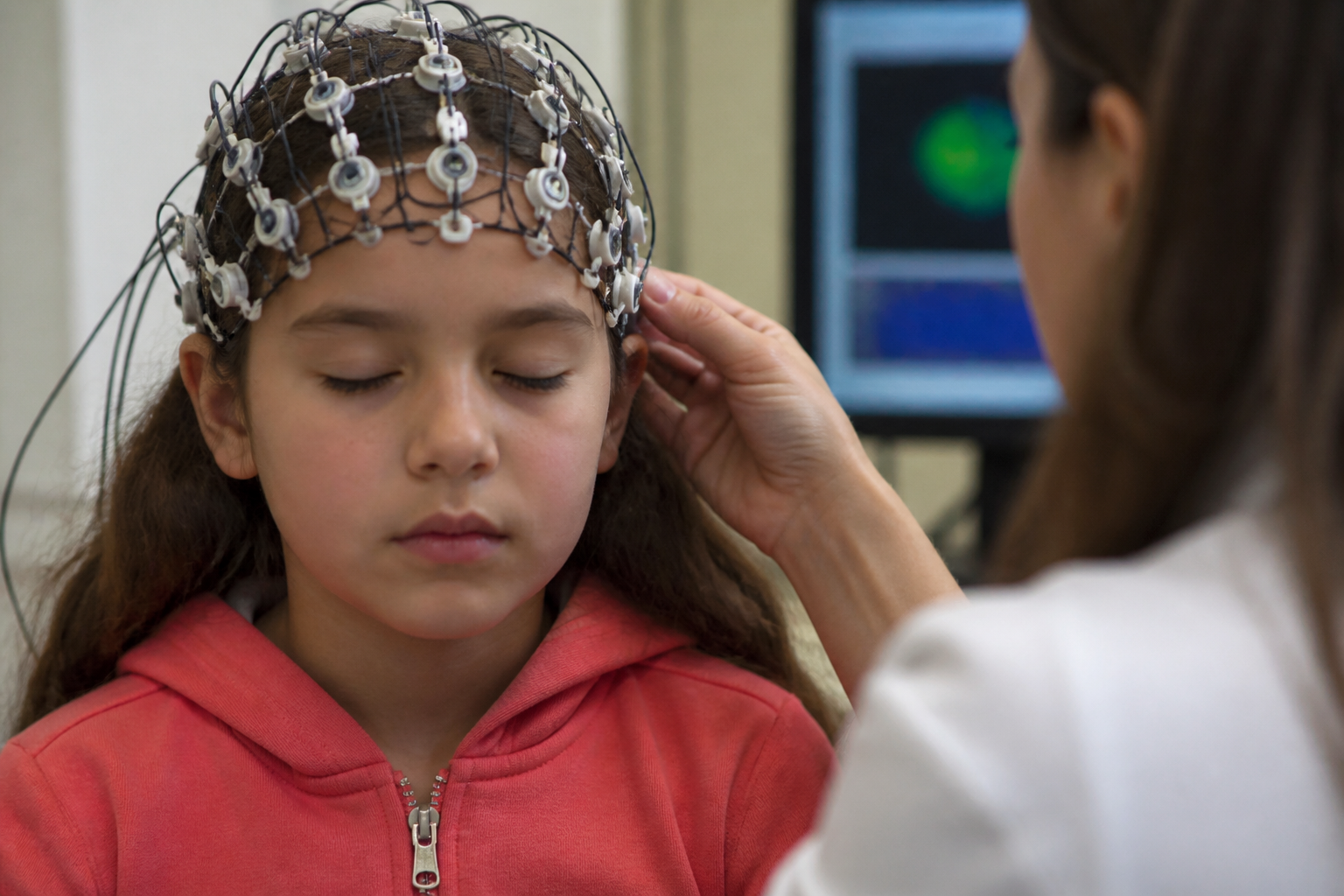
How often a preschooler blinks, without thinking about it, turns out to track something meaningful about how their brain is developing. Researchers studying 113 children aged 3 to 6 years found that spontaneous eye-blink rate, the number of times a child blinks per minute during ordinary activity, outside of conscious control, was associated with better performance on a cognitive flexibility task and with focused activation in a specific region of the prefrontal cortex, the front part of the brain involved in planning, impulse control and adapting to new rules. The findings were reported by Neuroscience News, drawing on a published study.
Cognitive flexibility is the ability to shift mental gears when the rules change. In the study, children played a card-sorting game in which the sorting rule switched partway through, from color to shape, for example. Children with higher spontaneous blink rates performed significantly better on that rule-switching task, according to the study. That association held even after the researchers accounted for the children's age, meaning blink rate was not simply a stand-in for being older.
To understand what was happening in the brain, the team used functional near-infrared spectroscopy, or fNIRS, a noninvasive technique that places light sensors gently on the scalp to measure blood flow changes in the cortex, as a proxy for brain activity. Higher blink rates were linked specifically to activation in the right dorsolateral prefrontal cortex, a region already well-documented in adults as central to cognitive flexibility. No correlation appeared in other prefrontal subregions the team measured. Older children also showed more focused, specialized activation in that same region, suggesting the brain's circuitry for this kind of thinking becomes more precise as children develop.
Spontaneous blinking is thought to be influenced by dopamine signaling, the brain's system for regulating motivation, attention and reward. The developmental timeline fits: newborns blink only a few times per minute, and blink rate rises through early childhood, approaching the adult average of 20 to 30 blinks per minute around the same window when executive function, the set of mental skills that includes impulse control, working memory and flexibility, solidifies.
What makes this worth watching is the measurement itself. fNIRS is already less intimidating than MRI for young children, but blink rate requires only a standard video camera. If the association holds up in larger and more diverse samples, it could offer a low-cost, low-burden way to track prefrontal development in settings where neuroimaging is not available.
What this study cannot tell you yet is substantial. This is an associational finding in a single sample of 113 children. It does not establish that blink rate causes better cognitive flexibility, or that the right dorsolateral prefrontal cortex is the mechanism rather than a correlated signal. The study has not been tested in children with neurodevelopmental conditions, which is where the clinical promise would ultimately lie. Senior authors Dr. Atsuko Yamashita and Dr. John-Paul J. Yu said, as quoted by Neuroscience News, that they hope "to gather additional evidence from pediatric clinical studies to determine whether these findings can be translated to the early detection of neurodevelopmental conditions", framing that correctly positions this as a starting point, not an arrival.
The open question is replication: does the blink-rate signal hold in different populations, different cultural settings, and in children whose executive function development is atypical? That is what would need to be true for this to become a clinical tool rather than a laboratory observation.
Source: https://neurosciencenews.com/eye-blink-cognitive-flexibility-neurodevelopment-31223/