Performance
A mushroom peptide made salt taste 70% saltier in lab tests, no extra sodium needed
By Life and Health Today Staff, . Life and Health Today.
What the researchers found
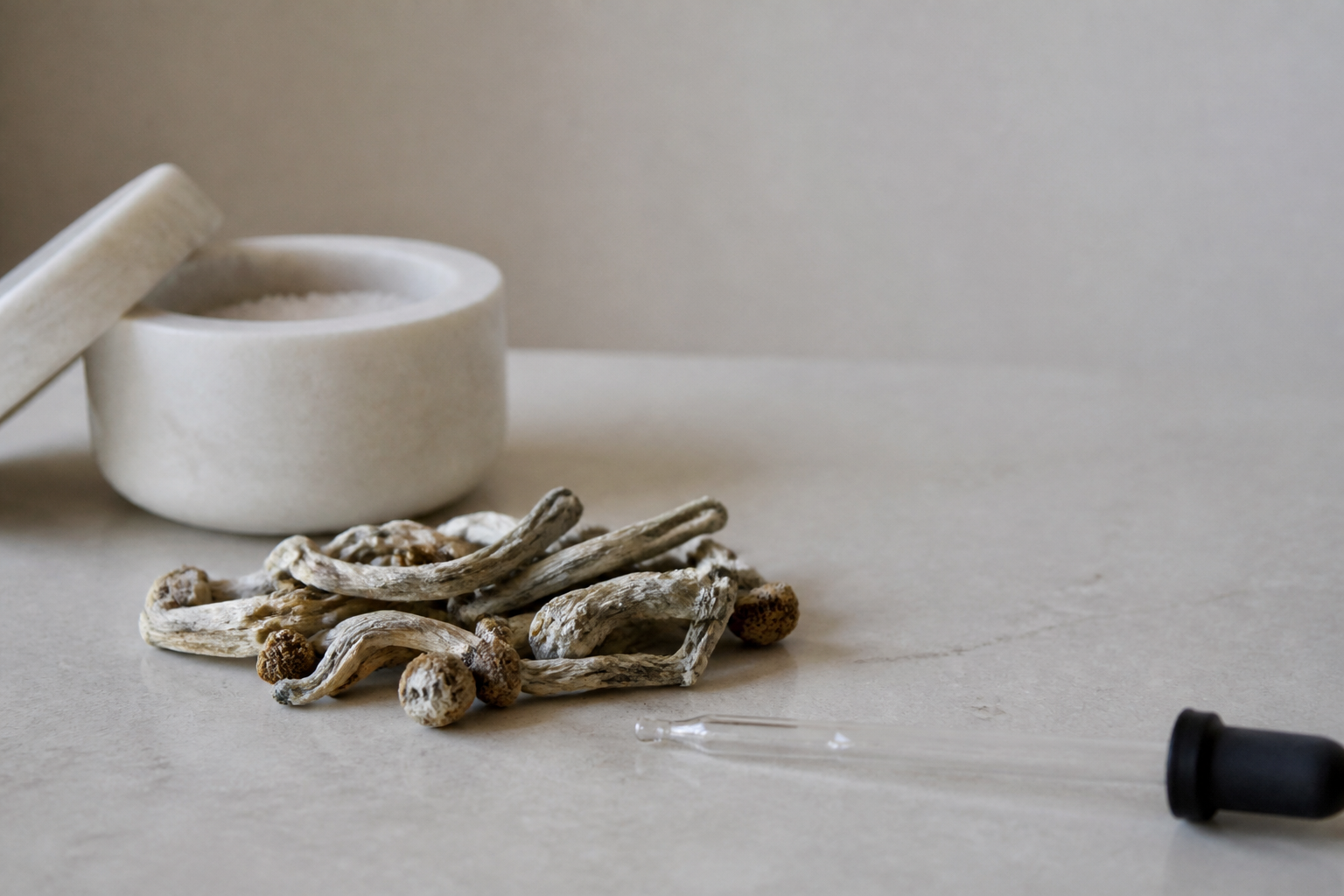
A peptide, a short chain of amino acids smaller than a protein, isolated from the edible Hypsizygus marmoreus mushroom made salt taste roughly 70 percent saltier in controlled testing, according to research reported by New Atlas. The work was conducted by researchers at Gannan Medical University in China, who used mass spectrometry, a technique that separates and identifies molecules by their mass, to screen around 6,000 peptide candidates from the mushroom down to five that looked stable and safe enough to pursue.
Those five were synthesized in the lab and tested on both human tasters and an electronic tongue, a sensor array that mimics how taste receptors respond to flavor compounds. Three of the five showed meaningful saltiness enhancement over a 75-to-105-second window. The strongest, a peptide the researchers labeled ASHGEGF, enhanced perceived saltiness by 70.59 percent, according to New Atlas. Two others, LDDGF and GDDWT, came in at 49.02 percent and 47.06 percent respectively.
How it works at the receptor level
All three peptides appear to act on a receptor called transmembrane channel-like protein 4, or TMC4, which detects saltiness and relays that signal to the brain. By binding to this receptor, the peptides seem to amplify the signal that a small amount of sodium already produces, meaning food could contain less salt while tasting just as salty.
New Atlas noted that a 2025 paper had already suggested mushrooms could interact with this receptor, but the mechanism was not clear until this work.
What this does not show yet
The testing was done on isolated taste responses, not in actual food products and not in a clinical trial measuring sodium intake or blood pressure outcomes. The researchers' next step, as reported by New Atlas, is to test ASHGEGF in a low-sodium mixture and in real food, where the practical questions begin: whether the enhancement holds when the peptide is mixed with other ingredients, whether it survives cooking temperatures, and whether it tastes right in context rather than in isolation.
The researchers described their findings as proposing "a screening strategy for saltiness-enhancing peptides from Hypsizygus marmoreus" that could support "their potential as taste enhancers for low-sodium food applications." That is a statement of potential, not a demonstrated product.
No regulatory body has reviewed or approved this compound for use in food. It is not available to consumers.
Why sodium reduction is hard
The difficulty with low-sodium diets is not usually knowledge. The difficulty is that sodium does real flavor work, and reduced-sodium versions of processed foods have historically tasted noticeably different. A compound that lets manufacturers cut sodium without changing the taste profile would address the problem at the point where most dietary sodium actually enters people's bodies: packaged and processed food, not the salt shaker at home.
Whether ASHGEGF can do that at scale, at food-safe concentrations, and at a cost that makes commercial use realistic are all open questions. The Gannan Medical University team has identified something worth following. The food industry and regulators would have to do a great deal more work before it reaches a label.
Source: https://newatlas.com/diet-nutrition/mushroom-peptides-no-extra-salt/
Life & Health Today provides information for educational purposes only, not medical advice, diagnosis, or treatment. Always consult a qualified healthcare professional.