Performance
Low energy availability in female athletes is common and underdiagnosed, ACSM warns
By John Hyland, . Life and Health Today.
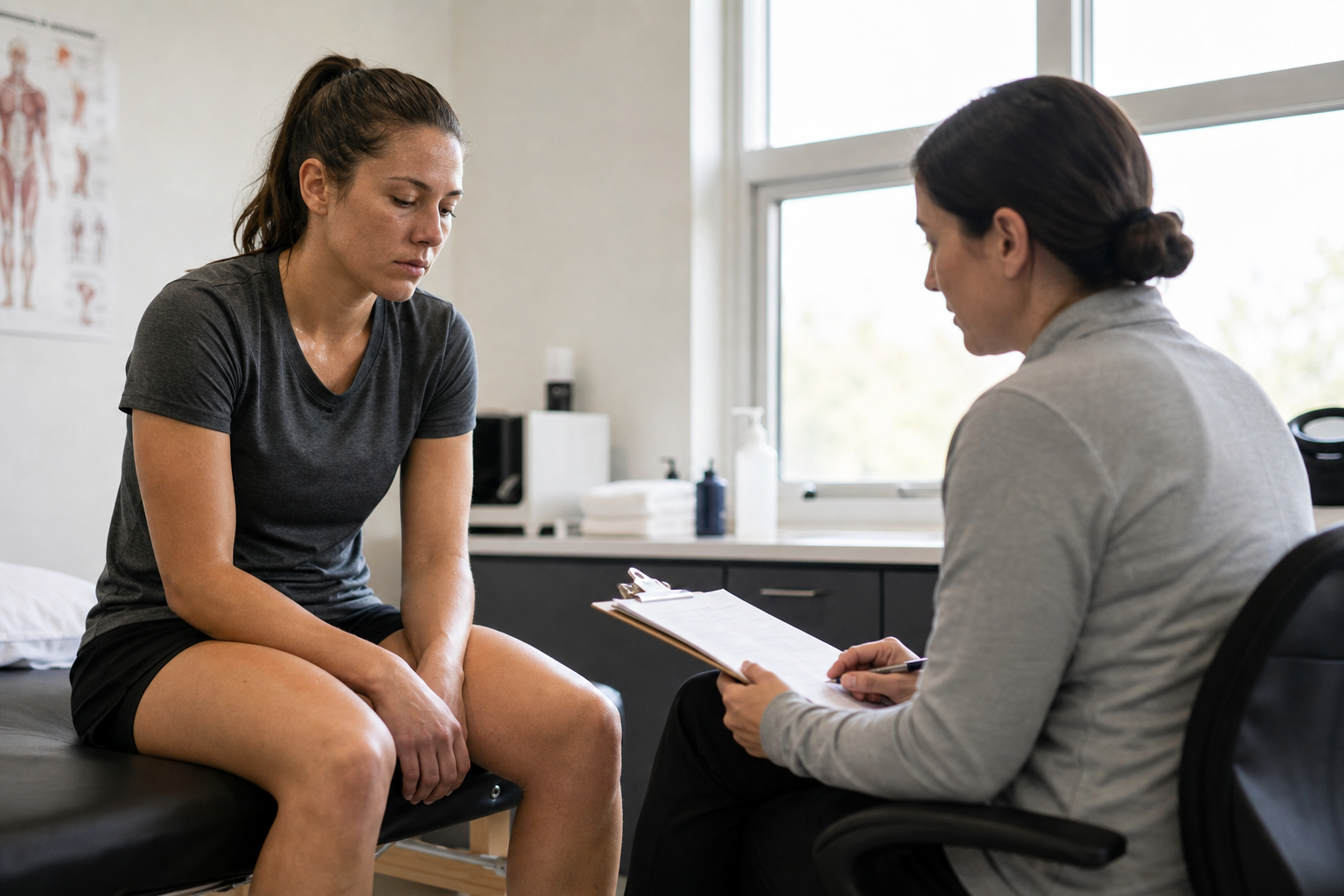
Between 23% and 80% of female athletes may be experiencing low energy availability, according to a 2023 International Olympic Committee consensus on Relative Energy Deficiency in Sport cited in a new commentary from the American College of Sports Medicine, authored by Melissa T. Lodge and Christie L. Ward-Ritacco of the University of Rhode Island.
Low energy availability, or LEA, is what happens when the body does not have enough fuel left over after exercise to run its normal systems, including bone maintenance, reproductive function, immune response and metabolism. When LEA is prolonged or severe, it can develop into Relative Energy Deficiency in Sport, known as REDs, a syndrome of impaired physical and psychological functioning. LEA and REDs are related but distinct conditions, and the American College of Sports Medicine piece is explicit that the two terms should not be used interchangeably.
The wide range in that prevalence estimate, 23% to 80%, reflects a genuine measurement problem. Lodge and Ward-Ritacco point to their own 2026 methodological review of 13 widely cited REDs screening questionnaires, which found substantial gaps in the evidence supporting those tools. Validation studies, they note, have been heavily concentrated on young female athletes in specific sports and geographic regions, limiting how confidently results can be applied across different populations. The authors are clear that screening should be understood as a first step toward identifying athletes who may need further evaluation, not as a way of establishing a diagnosis.
Why does inadequate intake happen? The American College of Sports Medicine piece identifies several overlapping causes: athletes may not understand how much energy their training actually requires; competing demands on time and attention can push fuelling aside; and practical barriers including meal planning, financial constraints and limited access to qualified nutrition support all play a role. Elsewhere, the shortfall comes from deliberate restriction, from weight-control practices, or from disordered eating. Body image concerns, psychological stress and sport-specific cultural pressures around body composition can compound these factors.
The consequences are not limited to performance. LEA affects bone health, reproductive function and immune capacity, meaning the risks extend well beyond a bad race or a slow recovery week.
Lodge and Ward-Ritacco argue that prevention should be the priority, and that nutrition education should reach everyone in an athlete's environment, not just the athlete. That includes parents, athletic trainers, coaches, sports medicine providers, and strength and conditioning professionals. Crucially, they write, education should frame adequate nutrition as something that supports health, recovery and adaptation, rather than as a tool for managing body weight.
For athletes whose screening results suggest a problem, the authors recommend an individualised clinical assessment with a registered dietitian, one that accounts for age, body composition, stage of growth and development, and reproductive life stage, as well as changes in training load, competition schedules and any injury or illness.
What this commentary does not establish is a single reliable way to identify which athletes are at risk. The screening tools in current use have real limitations, and the authors say so plainly. The open question is whether better-validated, more broadly applicable tools can be developed, and whether the sports environments that shape athlete behaviour, including the cultural pressures around body composition, can be changed alongside them.
Anyone weighing up nutrition support for a female athlete, whether as a clinician, a coach or a parent, should note that the authors' recommendation is for individualised assessment by a qualified sports dietitian. What that looks like in practice depends on the individual and belongs with someone who knows their full history.
Source: https://acsm.org/hot-topic-energy-balance-a-key-component-to-female-athlete-well-being/