Longevity
Semaglutide extended lifespan in older mice, but human evidence is absent
By Life and Health Today Staff, . Life and Health Today.
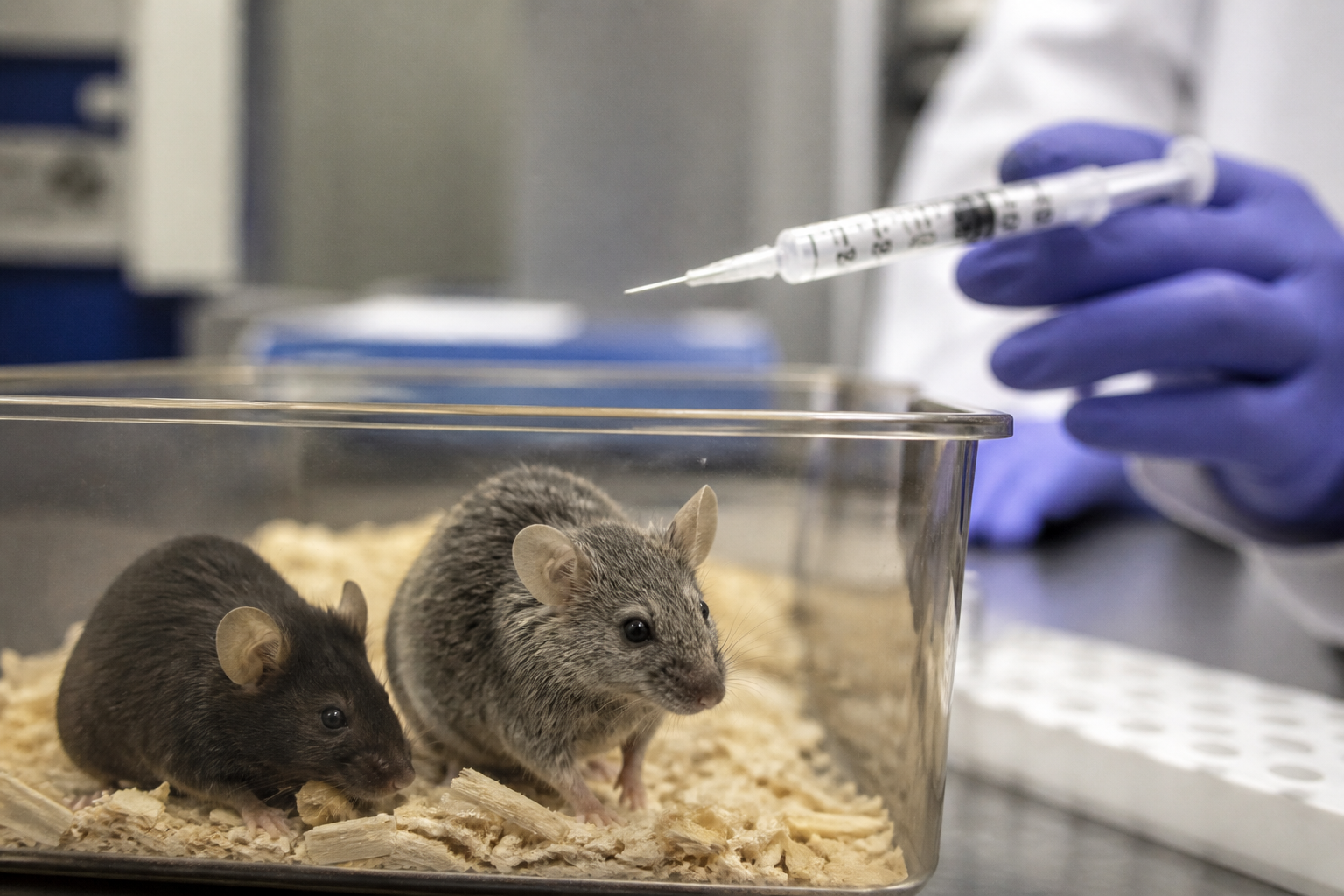
Semaglutide, the active ingredient in the weight-loss and diabetes drugs Ozempic and Wegovy, extended median lifespan by nearly 100 days in older female mice and improved several biological markers associated with aging, according to a study led by Danica Chen, professor of metabolic biology and nutrition at the University of California, Berkeley, funded by the National Institutes of Health.
The mice in the lifespan arm of the study were 20 months old when treatment began, which is late in a mouse's life, and received semaglutide until death. Compared with untreated mice of the same age, they lived longer and showed better muscle and cognitive function. Gene activity in the treated animals also reflected reduced inflammation and less decline in the body's capacity to repair and regenerate tissue, according to ScienceDaily Healthy Aging, which reported on the findings.
Because semaglutide suppresses appetite, the researchers wanted to rule out the simplest explanation: that the mice were just eating less, and that eating less was doing the work. To test that, they ran a direct comparison. For five months, one group of 20-month-old female mice received semaglutide while another was placed on a 24 percent calorie-restricted diet calibrated to match the food intake of the drug-treated animals.
The two approaches produced many similar effects, but semaglutide pulled ahead on several specific measures. Mice receiving the drug showed improvements beyond their starting levels in exploratory behavior, spatial memory, and blood-sugar maintenance. Their metabolic rate also held largely steady, while metabolism slowed in the calorie-restricted animals. Those differences are what led Chen to suggest, in the report, that GLP-1 drugs may be acting through a biological pathway that is separate from simply reducing calories.
GLP-1, or glucagon-like peptide-1, is a hormone the gut releases after eating. GLP-1 receptor agonists like semaglutide mimic that signal and are currently approved for type 2 diabetes and obesity management.
Rafael de Cabo, a senior investigator at the NIH's National Institute on Aging and author of a commentary on the study, was quoted by ScienceDaily Healthy Aging as saying: "Most chronic diseases are deeply rooted in the aging process. If GLP-1 agonists do indeed slow it down, then a wide range of clinical benefits is exactly what you'd expect to see."
What the study does not show is whether any of this applies to people. The findings are entirely in mice, and the history of longevity research is full of interventions that extended mouse lifespan and did not translate to humans. The ScienceDaily Healthy Aging report notes that additional clinical research will be needed to determine whether the effects seen in mice carry over, and that Chen has suggested future studies might investigate these drugs in healthy older adults without obesity or diabetes. No such trial has been completed.
The report also references a post-hoc analysis of something called the SLIM LIVER trial as one example of early human-adjacent work, but provides no detail on what that analysis found or how large it was, so it cannot be weighed here.
The open question is whether a drug already in widespread use for metabolic conditions is doing something to the biology of aging itself, or whether the mouse results reflect something specific to how mice age. Settling that would require a randomised controlled trial in older humans without the conditions the drug is currently prescribed for, measuring not just metabolic markers but meaningful health outcomes over years. That trial does not yet exist. Whether a reader who is not diabetic and not obese should be thinking about semaglutide in this context is a question that belongs with a clinician who knows their individual history, not with the current evidence.
Source: https://www.sciencedaily.com/releases/2026/09/260911214238.htm