Longevity
AI model predicts which memory-impaired patients will develop dementia within two years
By Life and Health Today Staff, . Life and Health Today.
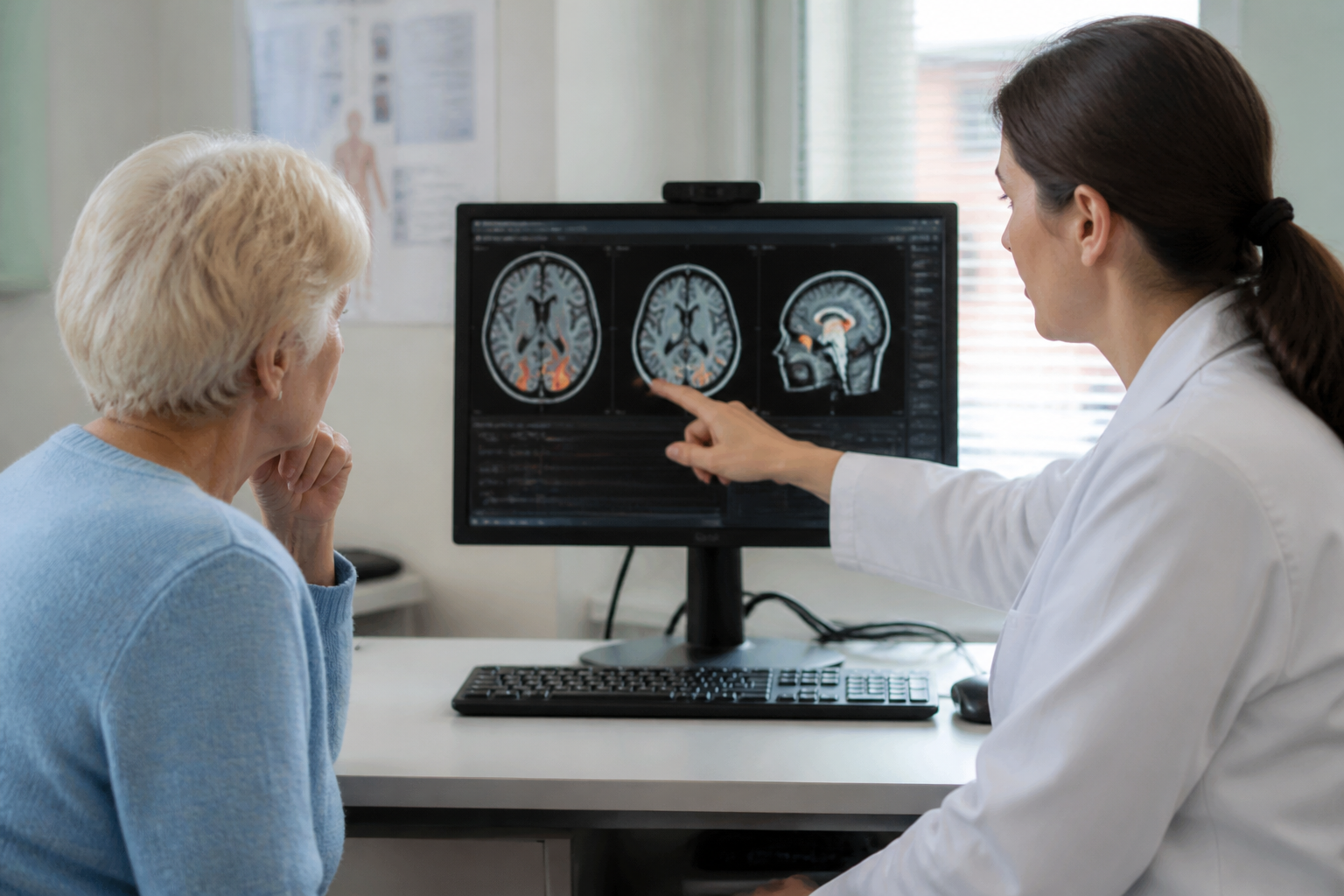
A machine-learning model can predict, from a single clinical visit, whether a person with mild cognitive impairment will develop dementia within two years, with a balanced accuracy of roughly 82%, according to a study published in the journal GeroScience.
Mild cognitive impairment, or MCI, is a state of memory and thinking difficulties that is more than normal ageing but not yet dementia. Some people with MCI remain stable for years; others convert to dementia relatively quickly. Knowing in advance which group a patient belongs to is one of the harder problems in dementia care, because it determines who might benefit most from early intervention.
The researchers analysed 2,008 data samples drawn from 828 unique MCI patients enrolled in the Alzheimer's Disease Neuroimaging Initiative, a large long-running research database. Of those patients, 702 progressed to dementia within two years and 1,306 did not. The team fed three types of information into their models: scores from cognitive and functional assessments, demographic and genetic variables, and measurements taken from structural MRI brain scans, which show the physical shape and volume of brain regions.
No single data type performed as well as all three combined. The best-performing algorithm, a calibrated XGBoost model, a type of machine-learning method that builds predictions by combining many simpler decision rules, reached a balanced accuracy of 81.28% plus or minus 2.56% during internal testing and 81.99% on an independent held-out group of patients the model had not previously encountered, with a 95% confidence interval of 78.22% to 85.51%.
To understand which inputs drove the predictions, the researchers used a technique called SHAP, short for SHapley Additive exPlanations, which assigns each variable a score reflecting how much it pushed a given prediction toward or away from conversion. The most influential factors were scores on the Functional Activities Questionnaire and the Clinical Dementia Rating Sum of Boxes, both of which measure how well a person manages daily tasks; performance on several versions of the Alzheimer's Disease Assessment Scale cognitive subscale and the Mini-Mental State Examination; the presence of the APOE epsilon 4 gene variant, which is the strongest known genetic risk factor for late-onset Alzheimer's disease; and structural changes visible on MRI in the hippocampus, lateral ventricles, parietal and temporal regions, and amygdala, all areas involved in memory and cognition.
The convergence of cognitive decline and region-specific brain shrinkage, the authors wrote, was the strongest overall signal of near-term conversion risk.
Several things this study does not establish are worth stating plainly. The data came entirely from the Alzheimer's Disease Neuroimaging Initiative, a research cohort that is not a random sample of the general population; how the model would perform in a routine clinical setting, on patients who differ from that cohort, is not known. The study also does not show that identifying high-risk patients and acting on that information changes what happens to them. A prediction tool is not a treatment, and the open question, whether earlier identification leads to better outcomes, would require a separate trial to answer.
The article as published in GeroScience was reviewed here in a truncated form; the final section, where authors typically state limitations and conflicts of interest, was not available. Readers who want the complete account should consult the journal directly.
What the study does contribute is a transparent, explainable framework, one where clinicians can see which factors drove a given patient's risk score rather than accepting a black-box output. That interpretability matters if such a tool is ever to be used in practice, because a clinician needs to know not just what the model said but why. Whether this particular model moves from a research database to a clinical workflow depends on prospective validation in independent populations, which the study does not yet provide.
Source: https://link.springer.com/article/10.1007/s11357-026-02551-x