Longevity
Kimchi bacterium doubled nanoplastic excretion in mice in early lab study
By Life and Health Today Staff, . Life and Health Today.
A bacterium found in kimchi can bind to nanoplastics under conditions designed to mimic the human intestine and, in mice, more than doubled the amount of those particles appearing in feces. That is the finding from researchers at the World Institute of Kimchi, a government-funded institute under South Korea's Ministry of Science and ICT, as reported by ScienceDaily.
Nanoplastics are plastic particles smaller than one micrometer, roughly one-thousandth of a millimeter, produced as larger plastics break down. They enter the body through food and water. Because of their size, they may cross the gut wall and accumulate in organs including the kidneys and brain, according to the World Institute of Kimchi researchers. Biological strategies to reduce that accumulation are, by the researchers' own description, at an early stage.
The team, led by Drs. Se Hee Lee and Tae Woong Whon, focused on a strain called Leuconostoc mesenteroides CBA3656, isolated from kimchi. Lactic acid bacteria are the microbes responsible for fermentation in foods like kimchi and yogurt. The researchers tested how well the strain could adsorb, meaning physically bind to the surface of, polystyrene nanoplastics.
Under standard laboratory conditions, CBA3656 bound 87 percent of the nanoplastics it was exposed to, comparable to a reference strain, Latilactobacillus sakei CBA3608, which bound 85 percent. The meaningful difference appeared when both strains were tested under simulated intestinal conditions. The reference strain's binding rate fell sharply to 3 percent. CBA3656 held at 57 percent. That gap matters because a bacterium that binds plastic in a lab dish but not in a gut-like environment offers little practical use.
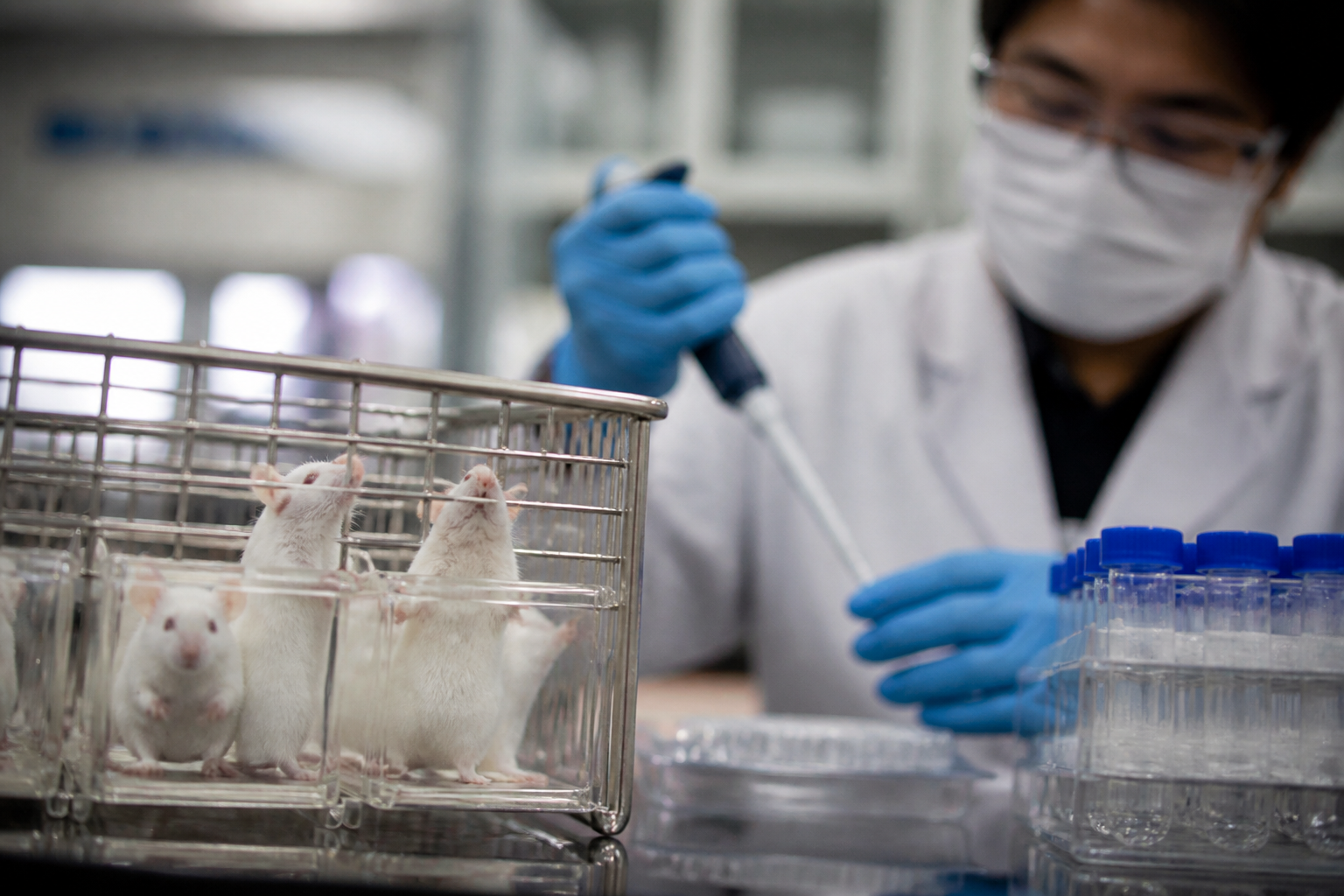
In animal experiments using germ-free mice, a model in which the animals have no existing gut bacteria so that the effects of the introduced strain can be isolated, both male and female mice given CBA3656 showed more than twice the nanoplastic content in their feces compared with mice that received no probiotic. The researchers interpret this as evidence that the bacterium may carry nanoplastics out of the gut rather than allowing them to be absorbed.
What this study does not show is whether the same effect occurs in humans. The jump from germ-free mice to people with complex, established gut microbiomes is large and uncertain. The study also tested only polystyrene nanoplastics, one type among many that humans are exposed to. It did not measure whether nanoplastic accumulation in organs was reduced, only that more appeared in feces. And it did not test any commercially available probiotic product or any dose of kimchi itself.
"Plastic pollution is increasingly recognized not only as an environmental issue but also as a public health concern," Dr. Se Hee Lee said, as quoted by ScienceDaily. "Our findings suggest that microorganisms derived from traditional fermented foods could represent a new biological approach to address this emerging challenge."
The open question is whether a human trial would replicate the fecal excretion result, and whether higher excretion in feces translates into meaningfully lower accumulation in tissue. Those are the findings that would need to exist before this moves from an interesting preclinical observation to something with clinical relevance. Anyone weighing whether this changes what they eat or supplement should raise it with a clinician who knows their individual situation, because the evidence is not yet at the stage where a general recommendation follows from it.
Source: https://www.sciencedaily.com/releases/2026/09/260917101058.htm