Longevity
Why Americans Keep Buying Treatments That Do Not Work
By Life and Health Today Staff, . Life and Health Today.
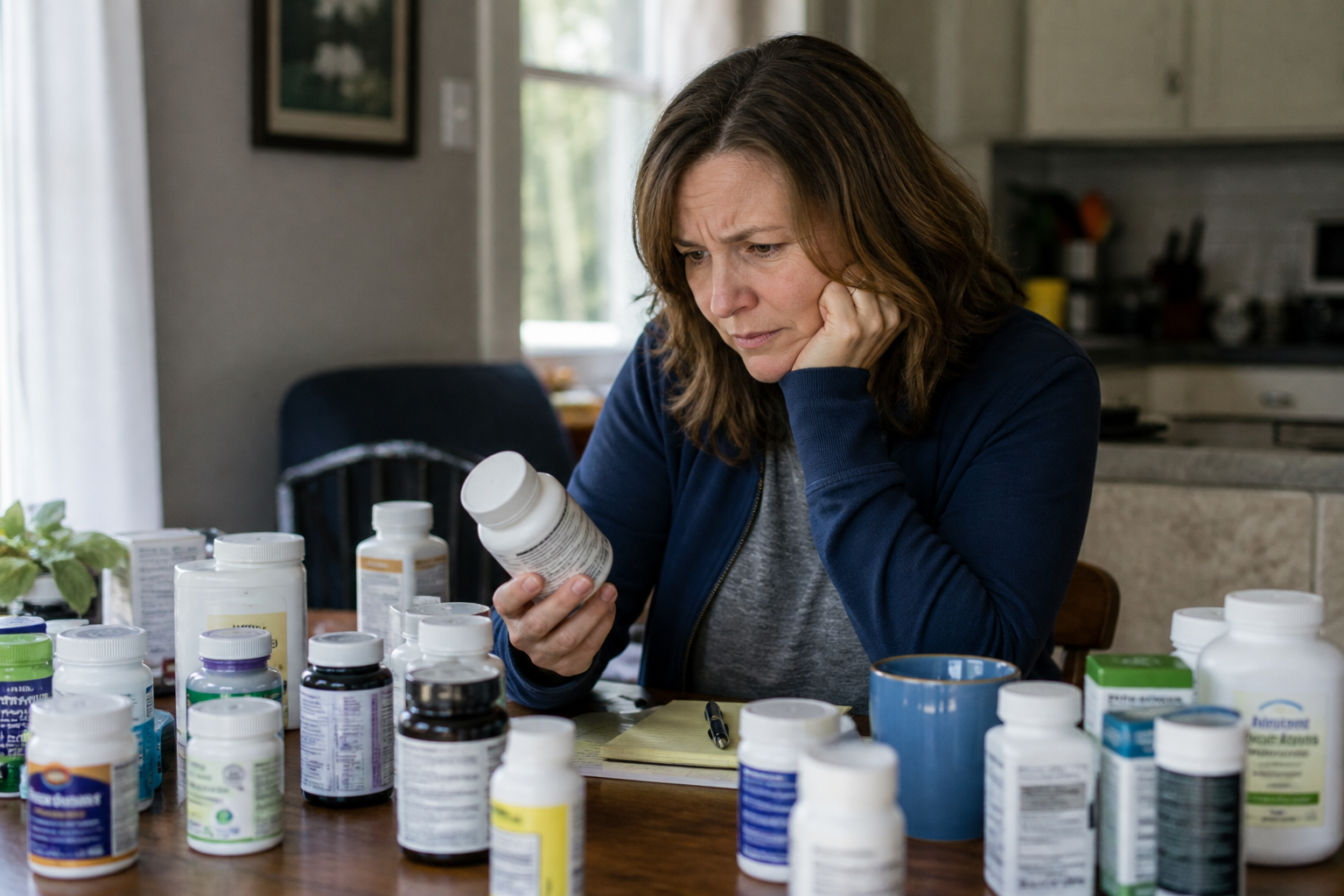
The United States has a 250-year record of embracing health treatments that do not hold up, and according to MedPage Today, the conditions driving that pattern are getting worse, not better.
Lydia Kang, MD, an associate professor of internal medicine at the University of Nebraska Medical Center and the author of a book on medical fads titled "Quackery," told MedPage Today that the core reason is not gullibility. "Everybody has a deep wish to have a long and fruitful life," she said, "without disability or pain and with your brain intact." That wish, she said, is what companies exploit.
The historical examples MedPage Today cites are instructive. Clark Stanley, known as the Rattlesnake King, sold a liniment he claimed could relieve pain, lameness, sprains and bunions. When the U.S. Bureau of Chemistry tested it in 1916, the agency found it was mainly mineral oil, with what the bureau described as "fatty oil (probably beef fat), capsicum, and possibly a trace of camphor or turpentine." The idea had come from Chinese railroad laborers who used oil derived from a different snake species, one that may have had genuine anti-inflammatory properties. The gap between that original substance and what Stanley actually sold is a template the piece argues has repeated itself ever since: a hint of plausibility, a large commercial leap, and a product that does not deliver.
What makes people susceptible is not irrationality, according to Tali Sharot, PhD, a neuroscience professor at University College London, who is quoted in the MedPage Today piece. Humans do not form beliefs primarily to build an accurate picture of the world, she said. They form beliefs "to have beliefs that will get us the most rewards and help us avoid harm." Believing a treatment will work can itself produce real psychological benefit, she noted, even when the treatment does not. "Believing that your future will be better than the past and the present," Sharot said, "many times can be optimal."
That is a genuine tension, not a simple story of victims and fraudsters. The anticipation of improvement has value. But it also, as Kang put it to MedPage Today, creates an opening: "What's scary is that they will take that hope and they will try to stick it in a bottle and sell it to you at whatever price that they think that you can afford."
Kang told MedPage Today that the current environment is more dangerous than earlier eras, for two reasons. Social media has given unproven treatments a distribution channel that patent medicine salesmen could not have imagined. And the sources people have historically trusted for health guidance are, in her view, less reliable than before. "The guard rails are off right now," she said. She pointed to Health Secretary Robert F. Kennedy Jr. as someone who has promoted or amplified unproven treatments, a characterisation MedPage Today reports without rebuttal from Kennedy's office in the text provided.
What this piece does not establish is whether any specific supplement, peptide, IV vitamin infusion or other currently marketed product works or does not work. MedPage Today is making a structural argument about the conditions that allow unproven treatments to spread, not evaluating individual products. The open question, which no single article can settle, is whether better-informed consumers or stronger regulatory enforcement would meaningfully change the pattern, or whether the psychological forces Sharot describes are durable enough to outlast either.
Source: https://www.medpagetoday.com/publichealthpolicy/generalprofessionalissues/123067