Regenerative
CRISPR tool maps unknown genes across bacteriophage genomes
By Life and Health Today Staff, . Life and Health Today.
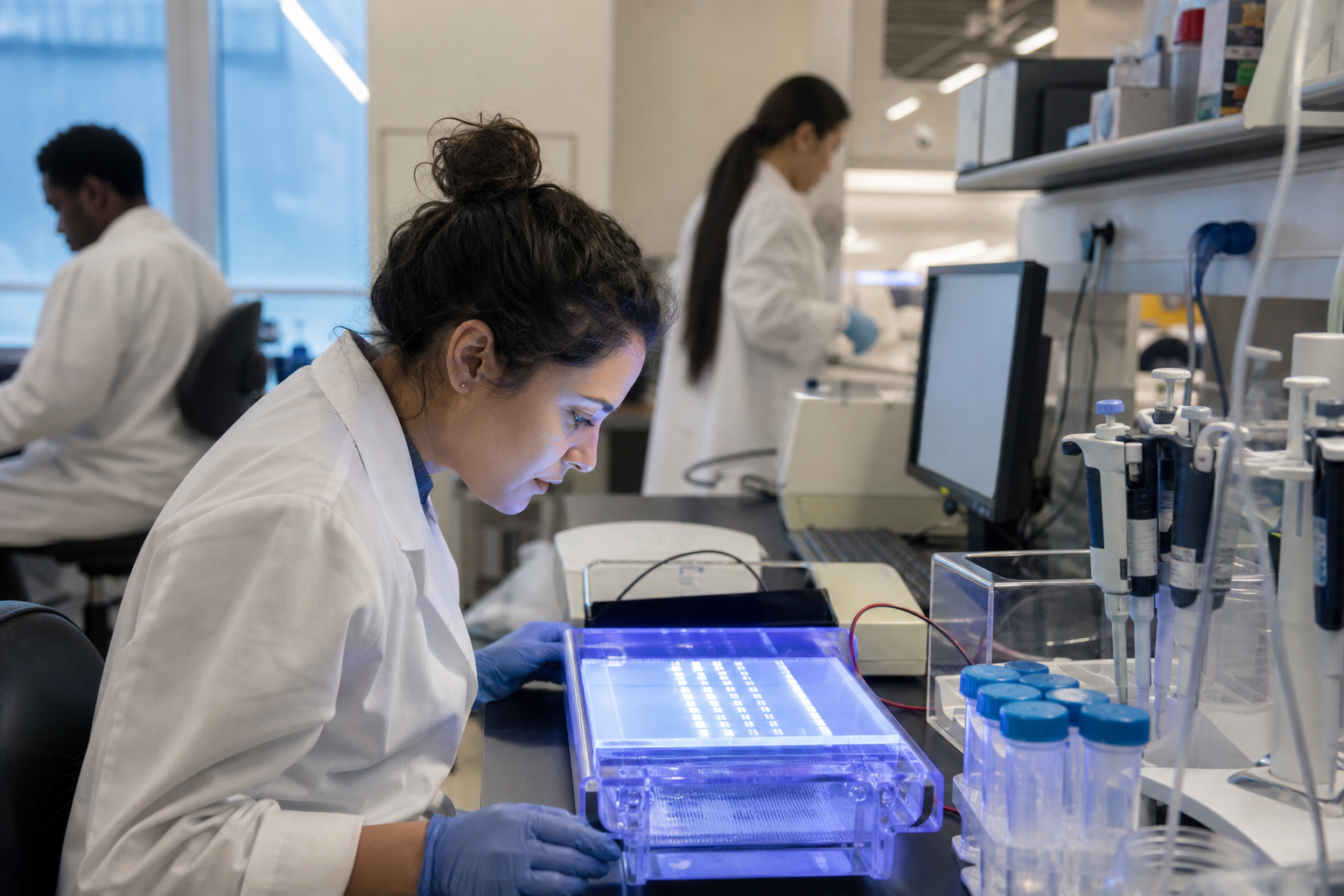
A team at the University of Otago in New Zealand has developed a platform for mapping and engineering the genomes of bacteriophages, viruses that infect and kill bacteria, at a scale and speed not previously available. The study, titled "Defining the essential genome of diverse phages with phage Tn-seq," was published in Nature Microbiology.
Bacteriophages, commonly called phages, have attracted growing interest as a potential answer to antimicrobial resistance, the global problem of bacteria becoming impervious to antibiotics. But progress has been slow, in part because the function of most phage genes remains unknown. Senior author Peter Fineran described the gap plainly: "Our knowledge of phages is probably like the understanding of antibiotics back in the 1950s," he said, adding that many phage genes encode functions researchers simply do not yet understand, which limits their usefulness in healthcare and biotechnology.
The new method combines two existing techniques. The first is transposon insertion sequencing: a transposon is a short piece of DNA that can jump into a genome and disrupt whichever gene it lands in. By doing this across thousands of sites simultaneously, researchers can build a map of which genes a phage can lose without dying and which are essential to its survival. The second element is a CRISPR-anti-CRISPR selection system, which recovers the phages carrying those mutations so they can be studied. CRISPR, in this context, is being used not to edit a human or animal genome but to sort and select among engineered phage variants.
Once the disruption workflow was established, the team extended it to insert new genetic material rather than simply knock genes out. They loaded the transposon with an additional sequence and used it to place a fluorescent marker inside phage genomes, demonstrating that the same tool can add as well as remove. Co-lead author Manuela Fuchs said: "Once we had that established, we thought we could expand the technique and also use it to add genes directly into the phage genomes." Senior author Leah Smith described the platform as "a systematic, broadly applicable, and cost-effective way to not only investigate gene function, but also rapidly engineer phage genomes."
The practical implication is that researchers could use the method to build phage variants carrying genes that help them defeat bacterial defense systems, potentially making engineered phages more effective against specific pathogens. The team said the work opens opportunities for both basic science and future therapeutic development.
What this does not show is that engineered phages are safe or effective in people. The University of Otago researchers themselves noted that any phage built using this platform would require further testing before it could be used in a clinical setting. All of the work described is laboratory-based; no human or animal trials are reported in this study. The finding is that a faster, more systematic way to understand and modify phage genomes now exists, not that a therapy is ready.
The open question is whether the platform works as well across the full diversity of phage types as it does on the specific phages tested here, and whether the engineered variants it produces will behave predictably enough to move toward clinical evaluation. Those answers will require further research that has not yet been reported.