Regenerative
Johns Hopkins built a microscope that watches mouse brains for 24 hours straight
By Life and Health Today Staff, . Life and Health Today.
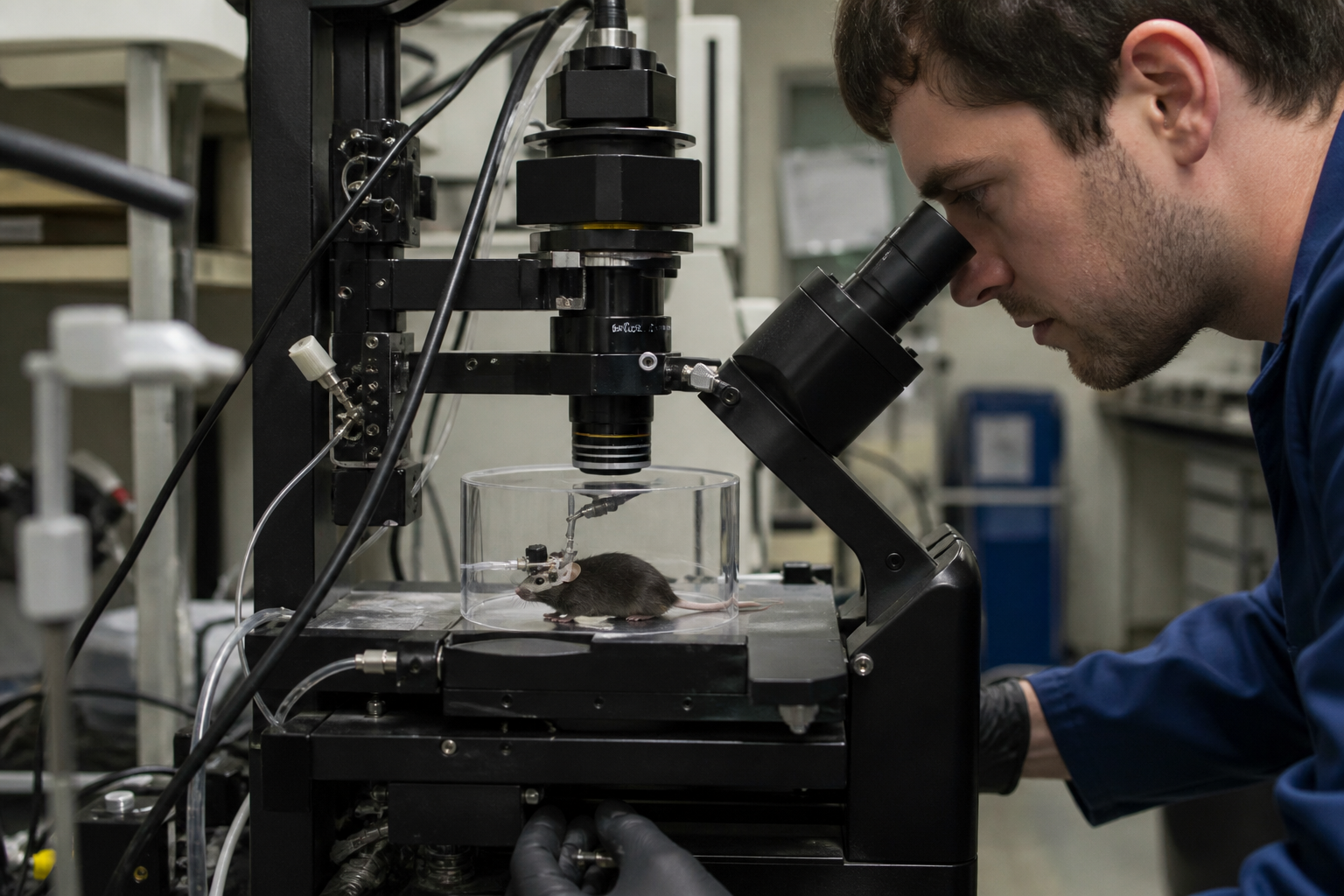
Researchers at Johns Hopkins Medicine have built a miniaturised microscope that sits on a freely moving mouse and streams brain imaging data to the cloud, where scientists anywhere in the world can watch in real time. The device, called CloudScope, can run continuously for more than 24 hours. The work was published in the journal Nature Methods.
The problem it addresses is straightforward: most neurological diseases develop over hours, days or weeks, but standard laboratory imaging tools capture only short windows of that process. "Most central nervous system diseases develop over hours, days or even weeks. Yet modern imaging tools are designed to continuously probe only a small fraction of this time window," Janaka Senarathna, an assistant professor of radiology at Johns Hopkins, said in the paper's accompanying materials reported by Genetic Engineering News.
In mouse experiments, the Johns Hopkins team used CloudScope to record neuronal activity (the electrical signalling of brain cells), blood flow, blood vessel remodelling, oxygenation and the movement of individual cells. In one set of experiments involving seizures, the device captured spontaneous seizures occurring several hours after a drug-induced seizure in mice, events that Genetic Engineering News reports would have been missed by conventional short-term imaging. In a separate set of experiments involving brain cancer, the researchers observed individual cancer cells and tracked changes in the brain's microenvironment as the disease progressed.
The team also combined their 24-hour brain imaging dataset with video recordings of the mice's behaviour and used it to train an artificial intelligence system. According to Genetic Engineering News, the AI was able to predict, from neuronal activity readings alone, whether a mouse was minimally mobile, moderately active or running. The researchers suggest this kind of approach could eventually help scientists study the neurological effects of conditions such as stroke or Parkinson's disease, though that work has not yet been done.
All of this is preclinical research, meaning it has not been tested in people. CloudScope is a laboratory instrument for studying animal models of disease, not a device available to clinicians or consumers. What it offers, at this stage, is a more complete picture of how disease processes unfold in mouse brains than researchers have previously been able to obtain.
The open question is whether continuous imaging of this kind will reveal biological events in animal models that translate into meaningful insights about human disease. That is not established by this work. What the study does establish, in mice, is that a 24-hour imaging window captures things a one-hour window does not, and that the data stream is rich enough to train a predictive AI model.
The Johns Hopkins team says it plans to expand CloudScope's capabilities to image larger regions of the brain and to use AI to accelerate the tracking of cancer cells. Whether findings from those studies will eventually inform human neurology research remains to be seen.