Longevity
Eating more eggs and peanuts in pregnancy did not cut babies' allergy risk
By Life and Health Today Staff, . Life and Health Today.
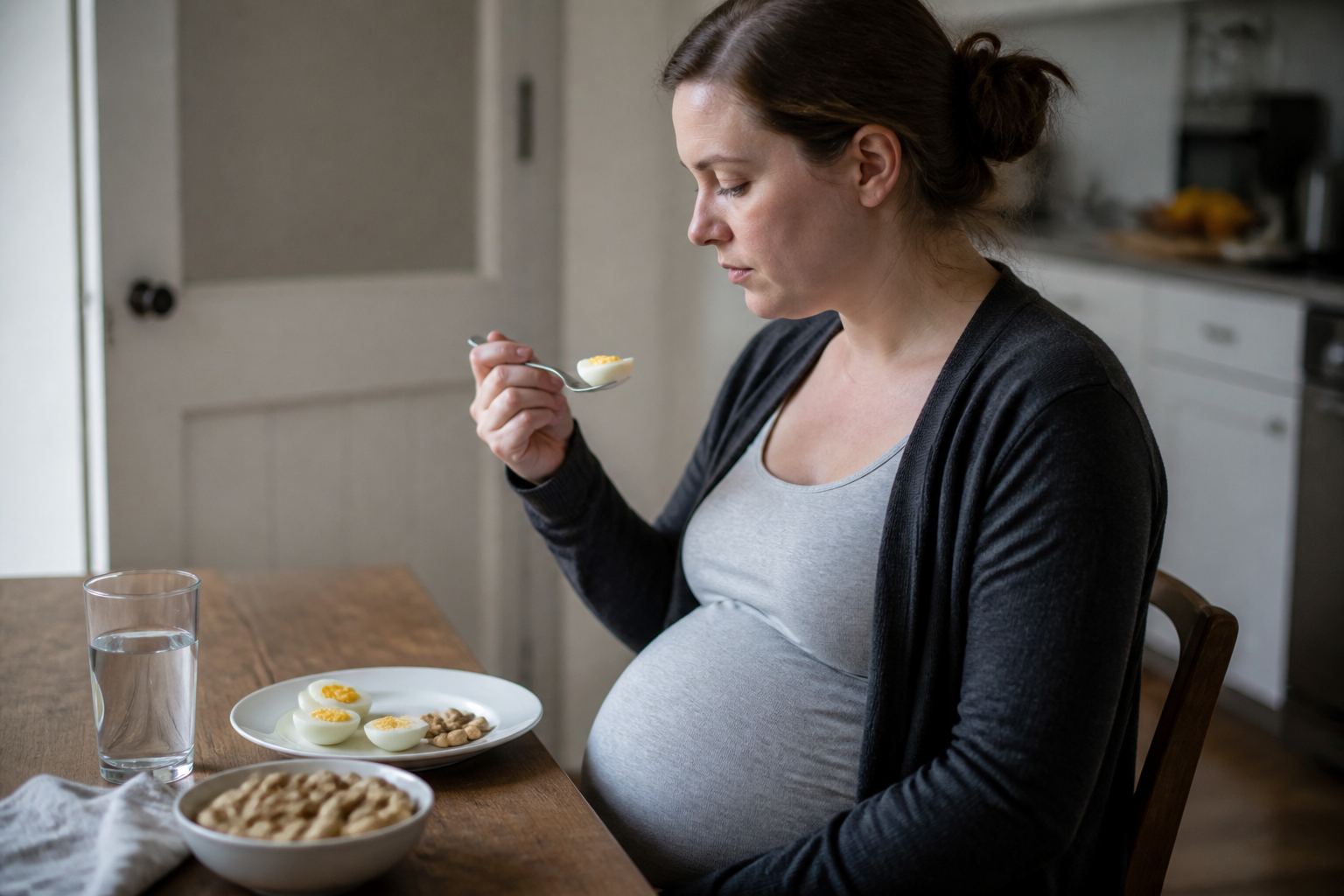
A large randomised trial has found that pregnant and breastfeeding women who ate high quantities of eggs and peanuts did not reduce their babies' risk of developing allergies to those foods by one year of age. The results were reported by researchers led by Debra J. Palmer, PhD, of the University of Western Australia in Nedlands, and published in the New England Journal of Medicine.
The PrEggNut trial enrolled 2,137 pregnant women at medical centres across four Australian cities, all of them under 23 weeks' gestation, planning to breastfeed for at least four months, and free of egg or peanut allergies themselves. Every woman had to have at least two biological family members of the baby, including the mother, father, or siblings, with a medically diagnosed allergic condition such as asthma, eczema, allergic rhinitis, or a food allergy. These were, in other words, families already considered at elevated risk.
Women were randomly assigned either to eat at least six eggs and 60 peanuts per week from before 23 weeks' gestation through to four months after birth, or to follow a standard diet capped at no more than three eggs and 30 peanuts a week. At one year, the proportion of infants with an IgE-mediated allergy, meaning an immune-system reaction driven by a specific antibody called immunoglobulin E, was 7.8 percent in the high-intake group and 8.4 percent in the standard-diet group. The relative risk was 0.93 with a 95 percent confidence interval of 0.69 to 1.26 and a p-value of 0.65, meaning the difference was not statistically significant and could easily be explained by chance.
Results were similarly flat when the researchers looked at egg allergy and peanut allergy separately, at sensitisation without full allergy, and at eczema rates at four and twelve months. Subgroup analyses found no meaningful variation. Safety outcomes, including serious adverse events and infant anaphylaxis to egg or peanut, were also similar between the two groups.
The trial had expected to see egg or peanut allergy in about 16 percent of infants in this high-risk group, based on older Australian data. The observed rate was roughly half that, around 8 percent. Palmer's team noted this lower-than-anticipated prevalence as a limitation, writing that it "may have reduced our ability to detect an effect," though they added that their confidence-interval analysis "argues strongly against a clinically important preventive effect of high maternal intake."
The likely explanation for the lower-than-expected allergy rate, according to an accompanying editorial by Maria C. Jenmalm, PhD, of Linköping University in Sweden, is that Australian infant-feeding guidelines were updated in 2016 to recommend early introduction of allergenic foods, and both groups in this trial received that advice. The trial may therefore have been testing a maternal dietary strategy on top of a population already benefiting from improved infant-feeding practice, which would compress the gap any additional intervention could close.
What this study does not establish is whether the same result would hold in populations where early infant introduction of allergenic foods is not yet standard practice, or in families with even higher baseline risk. It also cannot rule out a modest benefit: the confidence interval leaves open the possibility of up to a 31 percent risk reduction, though Jenmalm's editorial argues the overall evidence argues against that being real.
The practical upshot, as Jenmalm wrote in the editorial, is that pregnant and breastfeeding women who tolerate eggs and peanuts do not need to avoid them, but equally are not obliged to eat large quantities of them for their child's protection. The evidence that does exist for allergy prevention in high-risk families points toward timely introduction of those foods into the infant's own diet, not the mother's. Whether a reader's own family situation warrants a specific approach is a question for a clinician who knows their history.
Source: https://www.medpagetoday.com/allergyimmunology/allergy/123026