Longevity
Global hypertension guidelines split treatment into two tiers by resource level
By John Hyland, . Life and Health Today.
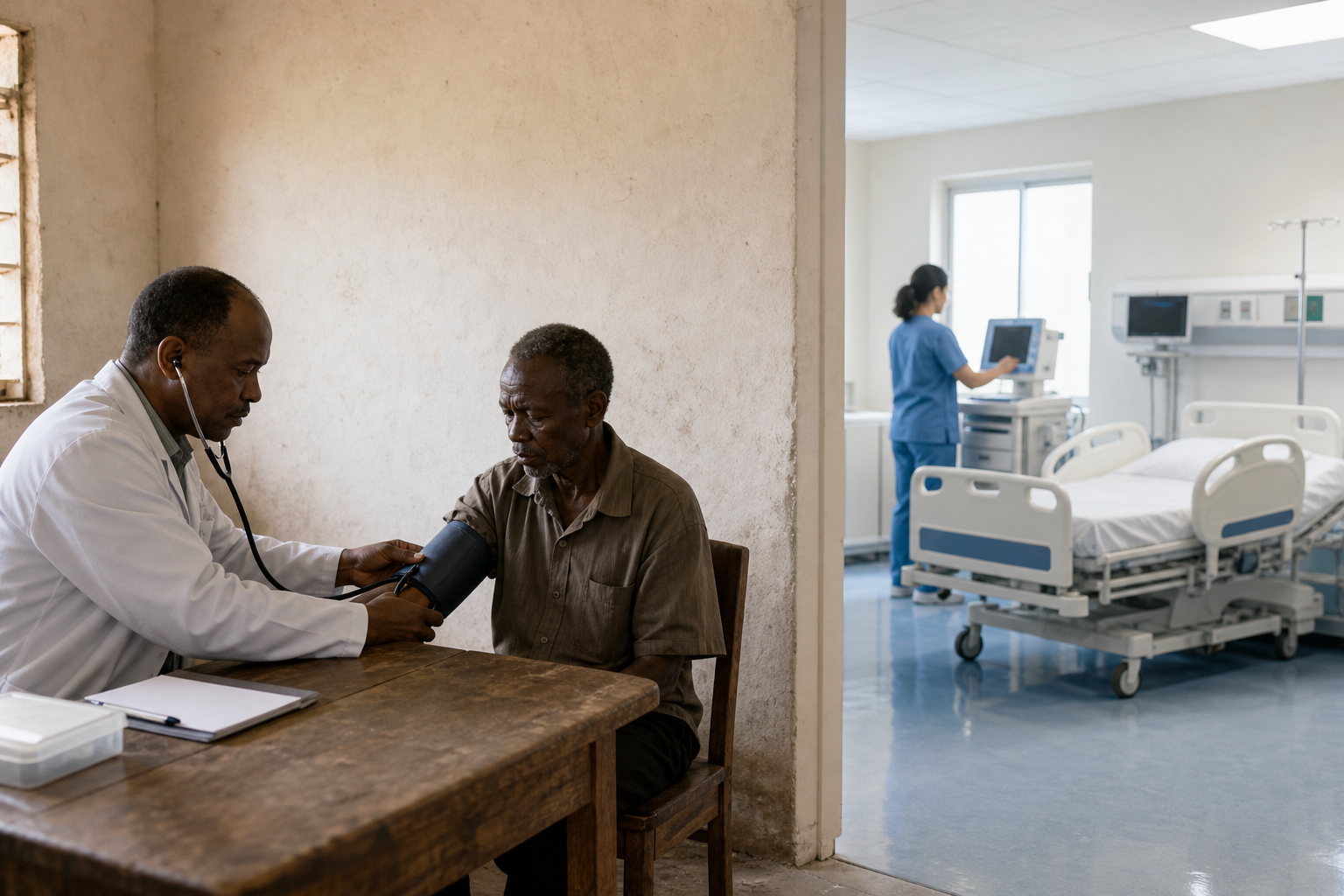
Blood pressure control fails not because medicine lacks the tools but because those tools are unevenly distributed. The updated International Society of Hypertension guidelines, published in the Journal of Hypertension and unveiled at the ISH 2026 Scientific Meeting in Dubai, take that premise as their starting point, dividing care into two explicit tiers rather than holding every system to one universal standard.
How the two tiers work
The framework separates "essential" care, defined as the minimum any patient should receive regardless of setting, from "optimal" care for systems with greater capacity. The blood pressure target under essential care is 140/90 mm Hg, the threshold at which hypertension is formally defined. Under optimal care, the target tightens to below 130/80 mm Hg. George Stergiou, MD, outgoing president of the International Society of Hypertension and lead developer of the guidelines, told Medscape Medical News: "Many healthcare professionals will not have everything available, so we make the distinction and say, go for the essential for everybody, and as much as possible employ any elements of the optimal that you can afford."
What changed on diagnosis and timing
The guidelines now recommend standardized home blood pressure measurement as the preferred method for both diagnosis and ongoing management under optimal care. The standard is an average taken over seven days, covering at least three of those days with twelve readings total. Casual office readings and home readings taken without that structure are described as inappropriate for diagnosis.
Cuffless devices and similar consumer technology are not recommended for clinical decisions, though the guidelines encourage their use for screening in populations without reliable access to formal healthcare.
On timing, the updated guidance moves earlier. High-risk patients should begin medication immediately. Lower-risk patients are given three months of lifestyle modification before medication is introduced.
The guidelines also retire the term "high-normal" for office readings between 130 and 139 mm Hg systolic or 85 to 89 mm Hg diastolic. The replacement term is "elevated blood pressure," a change the authors justify on behavioral grounds: patients, the guidelines argue, fixated on the word "normal" and underestimated their risk. Under optimal care, elevated blood pressure should be treated in all patients.
Newer drugs and a procedural option
Three drug classes appear in the optimal-care recommendations that were not prominent in the 2020 version: aldosterone synthase inhibitors, endothelin receptor antagonists, and nonsteroidal mineralocorticoid receptor antagonists. Each targets a different pathway involved in blood pressure regulation. Renal denervation, a catheter-based procedure that disrupts nerve signals to the kidneys, is listed as an option to be considered by specialist centers in selected cases.
The guidelines also make non-adherence to blood pressure medication an explicit, modifiable cardiovascular risk factor, a designation Stergiou said is often absent from comparable documents. "We know how and have the tools to control hypertension in 95% of patients," he told the publication. "The problem is that we do not see that translated into control in the population, so we have an implementation issue."
Getting guidelines used
The International Society of Hypertension has paired the publication with a one-year action plan and an AI-powered clinical support app called ISH OnTheGo. Stergiou described it as providing "practical, fast, evidence-based recommendations based on the 2026 guidelines to any question the healthcare professional might have while in the clinic." Kazuomi Kario, who assumed the ISH presidency at the Dubai meeting, said implementation across varied healthcare settings would be a central focus of his term.
A separate publication indexed on PubMed addresses hypertension specifically in sub-Saharan Africa, where the condition is described as escalating, with many cases undiagnosed and poorly controlled even among children. That paper argues Africa-centered guidelines are now a priority because international models do not adequately address the continent's clinical, cultural, and resource realities.
Stergiou disclosed consulting fees and lecture payments from a range of companies including Alnylam, AstraZeneca, Huawei, Menarini, Microlife, Omron, Sanofi-Aventis, Servier, SkyLabs, and Viatris. Whether those relationships influenced any specific recommendation is not addressed in the Medscape report.
For patients, the practical question is which tier their own clinician is working within, and what the gap between the two targets means for their individual management. That is a conversation that belongs with whoever is reading their blood pressure.
Life & Health Today provides information for educational purposes only, not medical advice, diagnosis, or treatment. Always consult a qualified healthcare professional.