Longevity
Exercise linked to slower biological aging clock readings in older adults with poor sleep
By Alaethia Blech, . Life and Health Today.
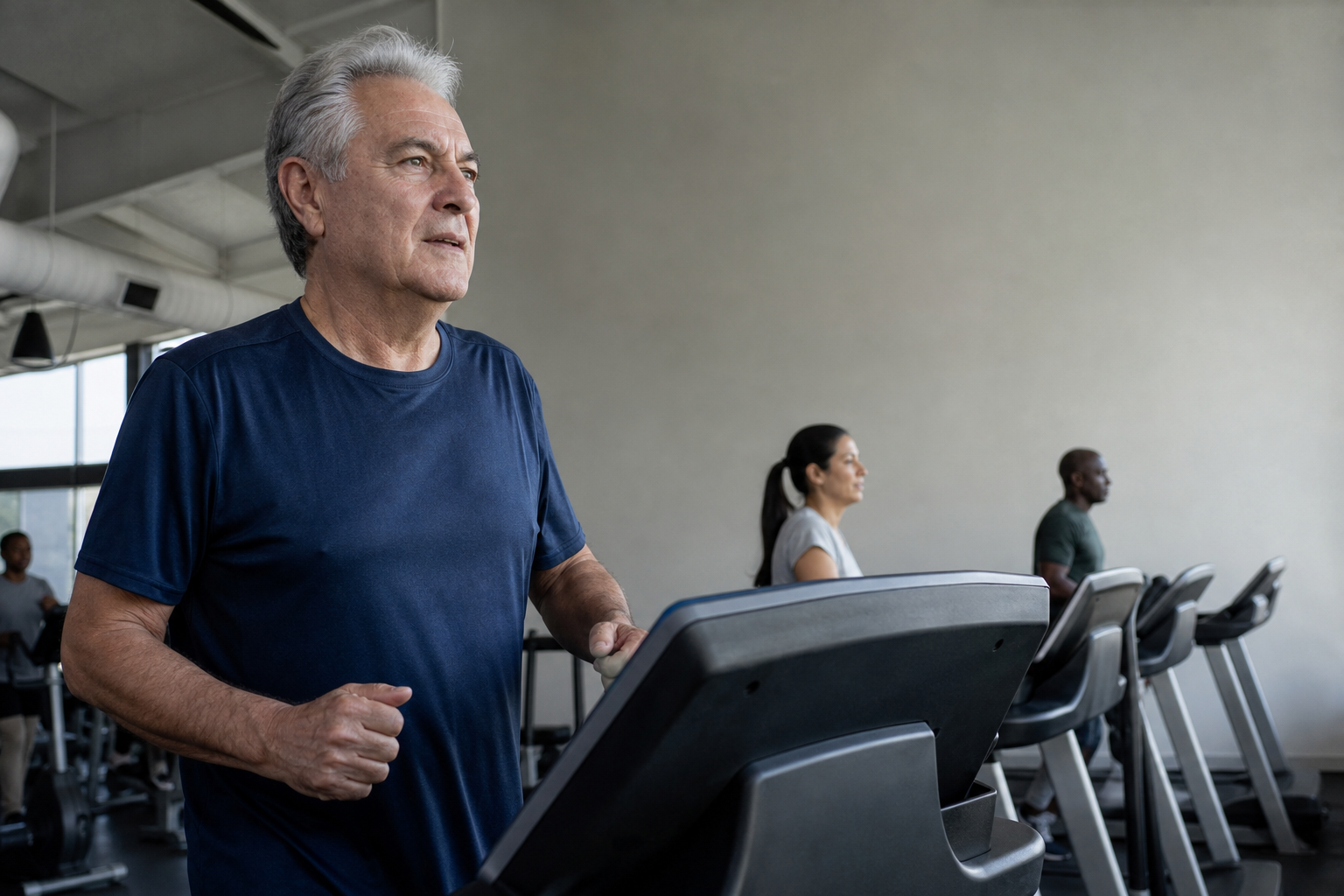
Being more physically active was associated with slower biological aging on multiple molecular clocks, especially in older adults whose sleep had deteriorated, according to a study published in GeroScience. The research drew on 890 adults from the INSPIRE-t cohort, ranging in age from 20 to 102, and examined how physical activity, sitting time, and sleep quality interact, rather than treating each as a separate variable.
What biological aging clocks actually measure
Biological aging clocks are tools that estimate how fast a person's body is aging at the molecular level, typically by reading chemical marks on DNA or tracking inflammatory signals in blood. They produce a number that can run ahead of or behind a person's calendar age, a gap researchers call age acceleration. The study examined five such clocks: PhenoAge, GrimAge, DunedinPACE, iAge, and an intrinsic capacity clock. Each captures a somewhat different dimension of aging biology, which is why the results varied across them.
Physical activity levels, sitting time, and sleep quality were all estimated from questionnaires rather than devices. Self-reported behavior is less precise than wearable measurement, and that distinction matters when interpreting the findings.
What the data showed, and where it held
In the main analysis, higher physical activity was associated with reduced age acceleration on the intrinsic capacity clock, but this held specifically in women, not in the full group. The more striking pattern emerged in the interaction analyses, which looked at what happens when lifestyle factors combine.
In older adults, the adverse association between sleep deterioration and faster biological aging was smaller among those who were more physically active, across four of the five clocks: GrimAge, iAge, DunedinPACE, and the intrinsic capacity clock. For DunedinPACE and GrimAge, a balanced combination of physical activity and limited sitting time showed a similar buffering pattern.
For men and the full study population, the association between more sitting time and faster GrimAge aging was attenuated, and in some cases reversed, among those who were more physically active, particularly when sleep quality was good.
The study was cross-sectional, meaning everyone was measured at one point in time. That design can identify associations but cannot establish that physical activity caused the slower aging readings. People who exercise more may differ from those who do not in ways the analysis could not fully account for, even after adjusting for age, sex, education, and existing health conditions.
What the findings do and do not say
The findings held across several different aging clocks, which measure different biological processes, lending some consistency to the pattern. The authors write that their findings "encourage increasing PA levels and limiting sedentary behavior or having an optimal combination of both in addition to maximizing sleep quality for preventing biological aging."
What the study cannot say is whether changing any of these behaviors would actually alter a person's biological aging trajectory. Biological aging clocks are surrogate markers, meaning they track molecular signals associated with aging rather than directly measuring lifespan or health outcomes. A clock reading that moves in a favorable direction has not been shown, on its own, to mean a person will live longer or stay healthier.
The finding that effects differed by sex and by age group also means the results do not apply uniformly. The buffering association between physical activity and sleep-related aging signals appeared in older adults; whether it holds in younger people is not established by this data. The GeroScience paper was reviewed here in partial form, with the full text running to roughly 11,000 characters and the version available covering the first 3,400, so the complete limitations and discussion sections were not available for this report.
For anyone weighing what this means practically, the question of how much activity, what kind, and how it interacts with their own sleep patterns belongs with a clinician who knows their individual history.
Life & Health Today provides information for educational purposes only, not medical advice, diagnosis, or treatment. Always consult a qualified healthcare professional.