Longevity
Genetic risk scores for hearing loss sharpen when built on real test data, not billing codes
By Life and Health Today Staff, . Life and Health Today.
A research group at Vanderbilt University Medical Center has shown that the way scientists define "hearing loss" in genetic databases makes an enormous difference to what those databases can find.
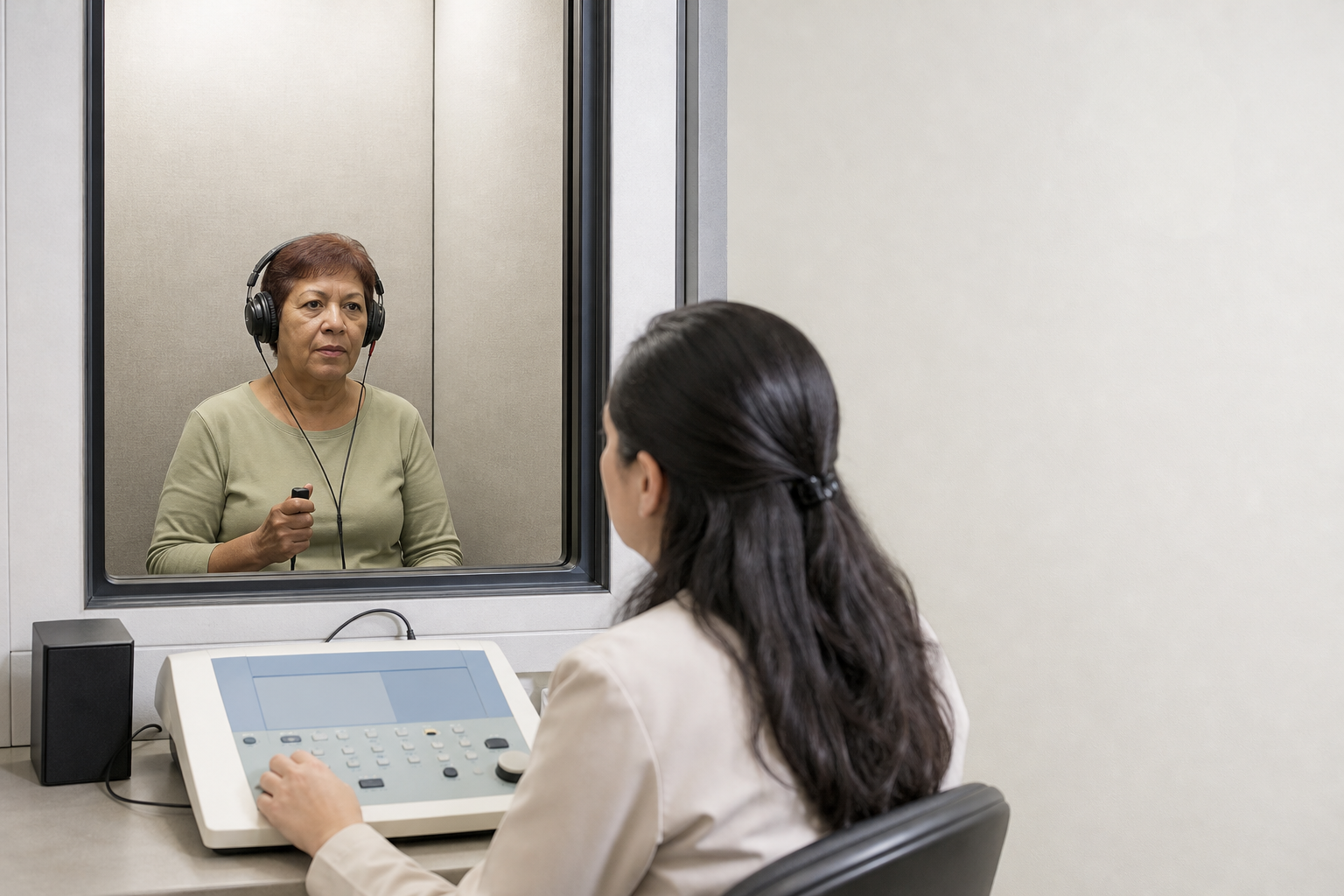
The study, published in JAMA Otolaryngology–Head & Neck Surgery, compared two approaches to identifying people with sensorineural hearing loss, the most common form of permanent hearing impairment, in which damage to the inner ear or auditory nerve reduces the ability to detect sound. The first approach used International Classification of Diseases billing codes, the standard shorthand labels that hospitals attach to patient records for administrative purposes. The second used actual audiometric measurements, the specific decibel thresholds at which a person can and cannot hear across a range of frequencies.
The difference in what each approach found was stark. The billing-code analysis, which drew on 10,164 people diagnosed with hearing loss and 51,305 without it, identified no genetic variants that reached the threshold for statistical significance. The audiometric approach, applied to 16,057 people whose full hearing test results were on file, identified three regions of the genome that did reach that threshold, mapped to four genes: EML6, SPTBN1, ARHGEF28, and EYA4.
The audiometric approach also produced a polygenic risk score, a single number that summarises a person's inherited genetic tendency toward a condition, that actually predicted outcomes in an independent group of people. When the team tested that score in a separate dataset from the National Institutes of Health's All of Us Research Program, people with higher scores were more likely to report being deaf, with an odds ratio of 1.09 and a 95 percent confidence interval of 1.07 to 1.12. The risk score built from billing codes showed no such association.
"Diagnostic codes are very common because that's the data that's available in large genetic biobanks that facilitate this research," co-first author Andie DeFreese, a clinical audiologist and doctoral candidate at Vanderbilt Health, said according to Neuroscience News. "Using them leads to a kind of gray area in which we're not able to accurately define who has hearing loss and who doesn't."
The underlying problem is that two patients carrying the same billing code can have very different degrees of hearing impairment, at different frequencies, with different patterns of loss. That variation blurs the genetic signal researchers are trying to detect.
The Vanderbilt team accessed its audiometric records through BioVU, Vanderbilt Health's biobank of de-identified genetic information linked to electronic health records, and cross-referenced those records with whole-genome sequencing data.
Corresponding author Taha Jan, an assistant professor of otolaryngology at Vanderbilt University Medical Center, pointed to a specific reason the finding has immediate clinical relevance. "Genetics is becoming increasingly relevant for precision therapy, especially now that the Food and Drug Administration has approved its first gene therapy for genetic hearing loss," Jan said, as quoted by Neuroscience News. That approval means identifying who carries a genetic predisposition is no longer only a research question.
What the study does not establish is whether acting on a polygenic risk score, by monitoring hearing more closely or intervening earlier, actually changes outcomes for patients. The research shows that the score predicts who develops hearing loss; it does not show that knowing the score in advance leads to better hearing later. That question would require a separate trial.
The study also worked with a population of European genetic ancestry at a single centre, which limits how broadly the findings apply. The research group says it plans to extend the models to predict not just whether hearing loss will occur, but which frequencies are most likely to deteriorate and when.
The work was funded by a Vanderbilt Lacy-Fischer Interdisciplinary Grant, an American Otological Society Fellowship Grant, and several grants from the National Institute on Deafness and Other Communication Disorders, part of the National Institutes of Health.
Anyone weighing up genetic screening for hearing loss should discuss their personal and family history with a clinician who knows their situation, since the predictive value of any risk score depends heavily on individual context.
Source: https://neurosciencenews.com/can-we-predict-hearing-loss-long-before-symptoms-ever-start/
Life & Health Today provides information for educational purposes only, not medical advice, diagnosis, or treatment. Always consult a qualified healthcare professional.