Longevity
Pennsylvania measles outbreak tops 1,300 cases, straining clinics and dividing parents
By Life and Health Today Staff, . Life and Health Today.
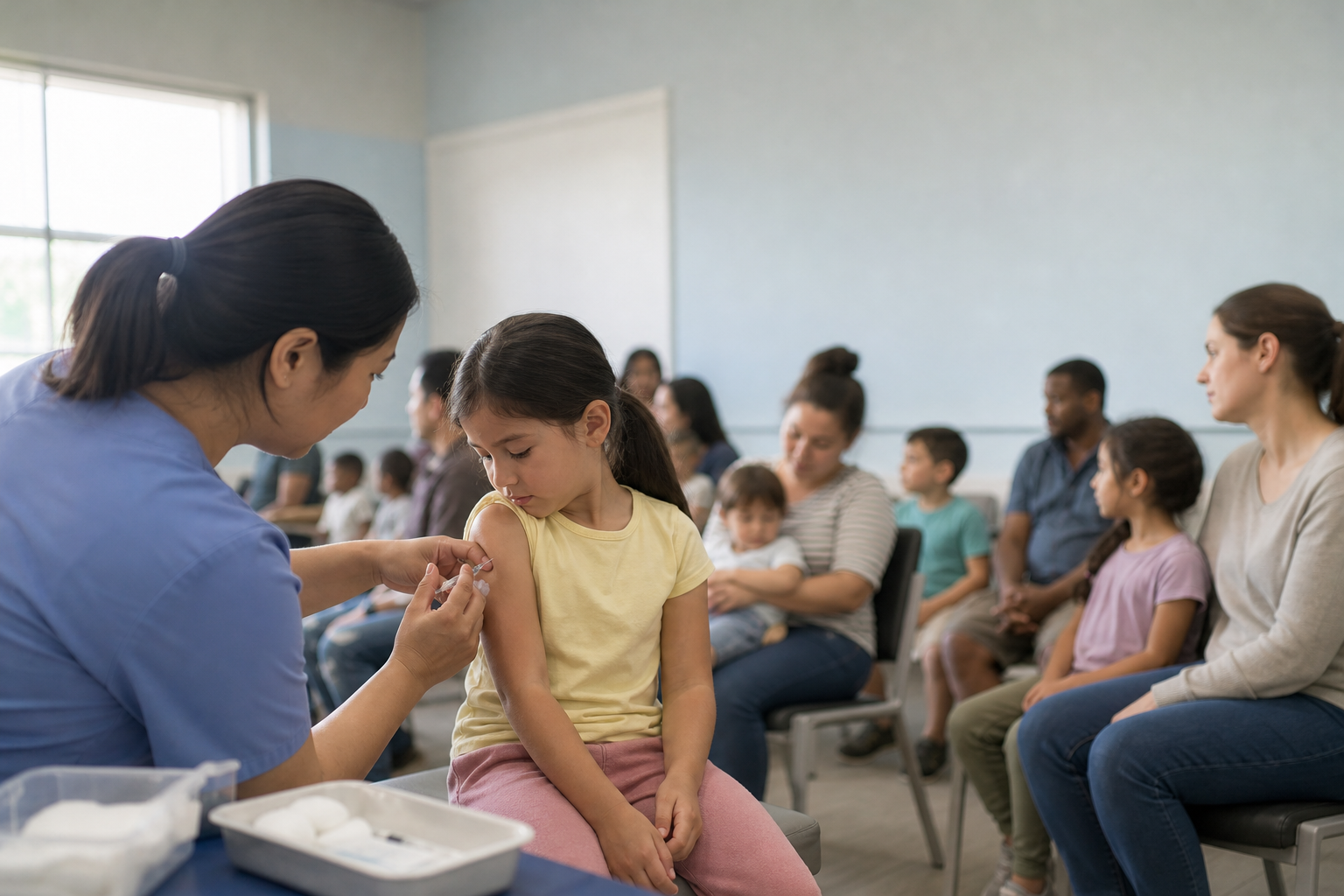
More than 1,300 measles cases have been reported in Pennsylvania, with a third of them in children, according to a first-person account published by STAT News and written by Katie Lockwood, M.D., M.Ed., a primary care pediatrician at the Children's Hospital of Philadelphia. The piece describes a clinical environment where some parents are pressing for early vaccination while others reject it entirely, and where the disease itself has become unfamiliar to the doctors who need to identify it.
What measles actually does
Lockwood cites figures from the Centers for Disease Control and Prevention to describe the disease's risks: one in five people with measles requires hospitalization, one to three in every thousand die, one in ten develops an ear infection, one in ten has diarrhea, one in twenty gets pneumonia, and one in a thousand develops brain swelling. Beyond those direct complications, measles can cause what researchers call "immune amnesia," a condition in which the immune system loses its memory of past infections, leaving a child newly vulnerable to illnesses they had already built defenses against.
Why doctors are struggling to recognize it
Lockwood writes that she has practiced pediatrics for 18 years and has never seen a measles case outside a textbook. The measles, mumps, and rubella vaccine eliminated measles in the United States in 2000, meaning most practicing physicians trained and worked through a period with no circulating disease. Early measles symptoms, including runny nose, cough, red eyes, fever, and rash, overlap with dozens of ordinary childhood illnesses. As fall viral season adds more of those common illnesses to the mix, Lockwood warns that the number of cases that look like measles but are not will increase, creating both confusion and pressure on the health care system.
Day cares and school nurses in the Philadelphia area have been sending home unvaccinated children with non-measles rashes because staff cannot reliably distinguish them, the report says. Clinics are consulting senior physicians who trained before the vaccine era, or calling in infectious disease specialists, to evaluate rashes that might be measles.
What the vaccination picture looks like
The standard schedule calls for a first MMR dose between 12 and 15 months of age and a second between ages 4 and 6. During an outbreak, the second dose can be given as early as 28 days after the first. The Children's Hospital of Philadelphia has administered more than 16,000 such early second doses since the outbreak began, according to the report.
Herd immunity for measles requires at least 95 percent of a community to be vaccinated. Below that threshold, the disease can spread even among people who are not directly exposed to a known case. The population most at risk includes pregnant women, immunocompromised individuals, and infants too young to be vaccinated.
Lockwood also notes that measles symptoms can appear anywhere from seven to 21 days after exposure, meaning someone who was exposed but feels fine is not necessarily in the clear. Anyone unvaccinated who has been exposed should stay home and away from others for the full 21-day window.
What clinics are asking families to do
The report's practical guidance centers on one logistical point that matters for how care is delivered: anyone who has been exposed to measles, or who develops symptoms, should call a health care provider before going in. Clinics need time to set up protocols that keep potentially infectious patients away from vulnerable ones. Showing up unannounced risks spreading the disease in a waiting room full of people who cannot be vaccinated.
For families weighing everyday decisions, Lockwood writes that no public health organization has recommended major lifestyle changes, and that much depends on a family's own risk tolerance and the vaccination status of the children involved. Those decisions belong in a conversation with a clinician who knows the child's history.
Life & Health Today provides information for educational purposes only, not medical advice, diagnosis, or treatment. Always consult a qualified healthcare professional.