Longevity
Durham startup raises $1.3m to screen longevity drugs in living worms
By Life and Health Today Staff, . Life and Health Today.
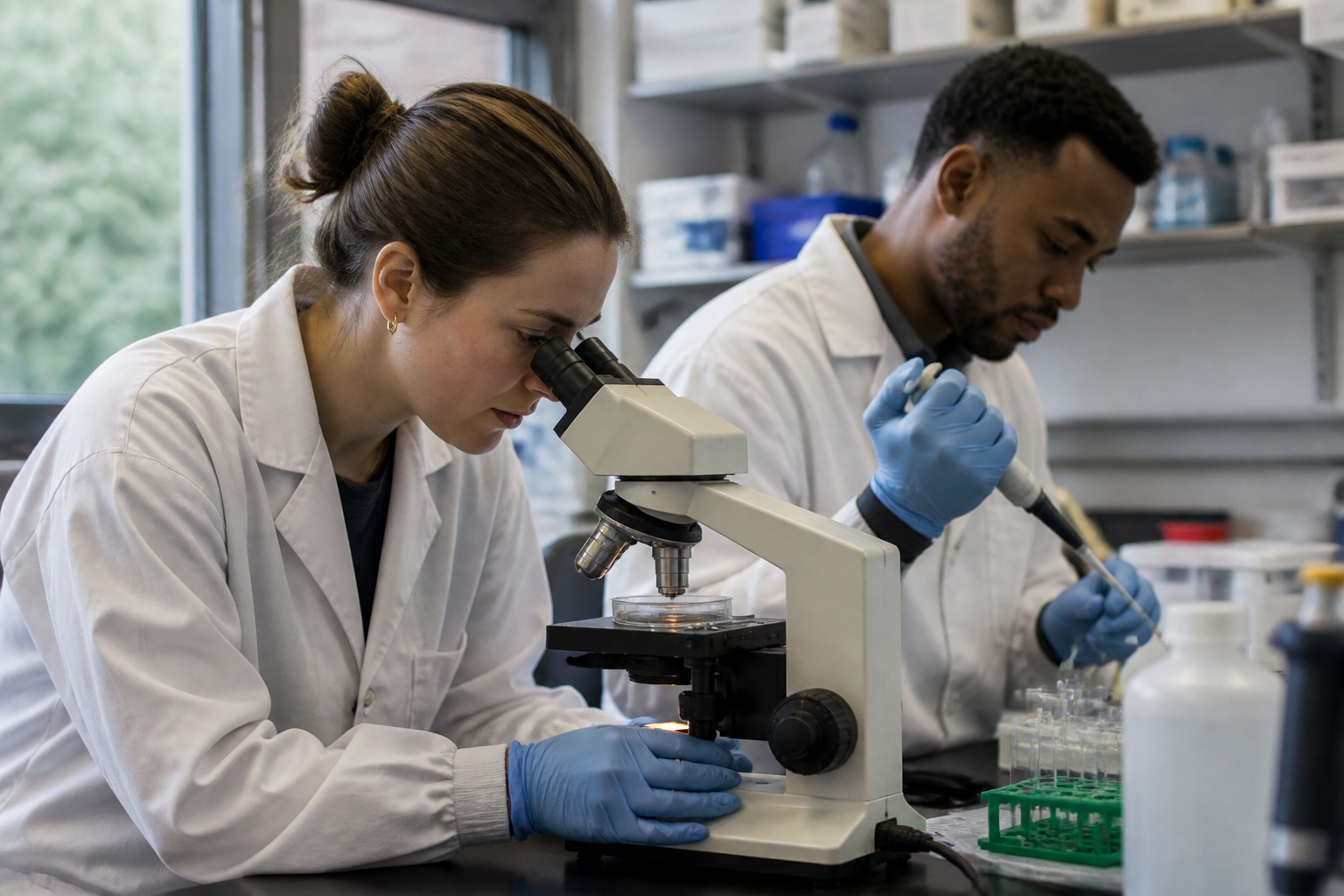
A Durham University spinout called Magnitude Biosciences has raised $1.3 million to expand a drug-screening platform built around one of biology's most studied creatures: C. elegans, a nematode worm roughly one millimetre long whose entire lifespan runs a few weeks. The funding round was reported by Longevity.Technology.
The company, based in Sedgefield in North East England and described by Longevity.Technology as a contract research organisation, is using the money to commercialise VivoScan, its high-throughput screening platform. High-throughput screening is the process of testing large numbers of chemical compounds quickly to find ones worth developing further. What distinguishes VivoScan, according to the company, is that it tests compounds in whole living worms rather than in isolated cells or molecules in a dish, using imaging, machine learning and automation to capture data across hundreds of worms at a time.
The relevance to ageing research is specific. Most compounds that look promising in isolated cells fail when tested in a full organism, because biological systems interact in ways a dish cannot replicate. For ageing research in particular, the problem is time: watching whether a compound extends healthy lifespan in mice takes two to three years, according to Longevity.Technology's report. C. elegans, because its entire life plays out in weeks, allows researchers to run the same kind of longitudinal test far faster, then carry the most promising candidates forward into mammalian studies.
Magnitude says it has already completed more than 120 client projects across drug discovery, health and nutrition, and ageing biology, using its patented WormGazer technology alongside VivoScan. The company's CEO, Dr Fozia Saleem, was quoted by Longevity.Technology saying the goal is to "fundamentally change the scale and speed at which drug discovery can be done" and to generate data that helps researchers understand "how potential therapies affect health, aging and disease."
The round was led by Northstar Ventures, drawing on the North East Spinout Inspire Fund, the North East Innovation Fund and the Northstar EIS Growth Fund, alongside investment from Maven's regional funds and angel investors. The round also unlocked a further $217,000 grant through Innovate UK's Investor Partnership programme, according to Longevity.Technology.
What this funding round does not establish is whether VivoScan's worm-based findings translate reliably into human outcomes. C. elegans shares a meaningful number of genes and biological pathways with humans, which is why it has been a laboratory tool for decades, but it is still a worm. Compounds that extend worm lifespan have not consistently done the same in mammals, let alone people. The platform is a tool for earlier-stage screening, not a substitute for the mammalian and human trials that would have to follow before any drug candidate reached a patient.
The open question, as Longevity.Technology framed it, is whether VivoScan becomes a standard bridge between early chemistry and clinical development. That would require pharmaceutical companies to adopt it at scale and, eventually, for compounds identified through it to succeed in later-stage trials. Neither has happened yet. What exists today is a funded platform, a client list of more than 120 projects, and a plausible argument that screening in a living organism beats screening in a dish. Whether the argument holds at the scale of human drug development remains to be seen.
Source: https://longevity.technology/news/magnitudes-worm-powered-drug-screening-lands-1-3m/