Longevity
GLP-1 users report nail detachment at four times the rate of non-users
By John Hyland, . Life and Health Today.
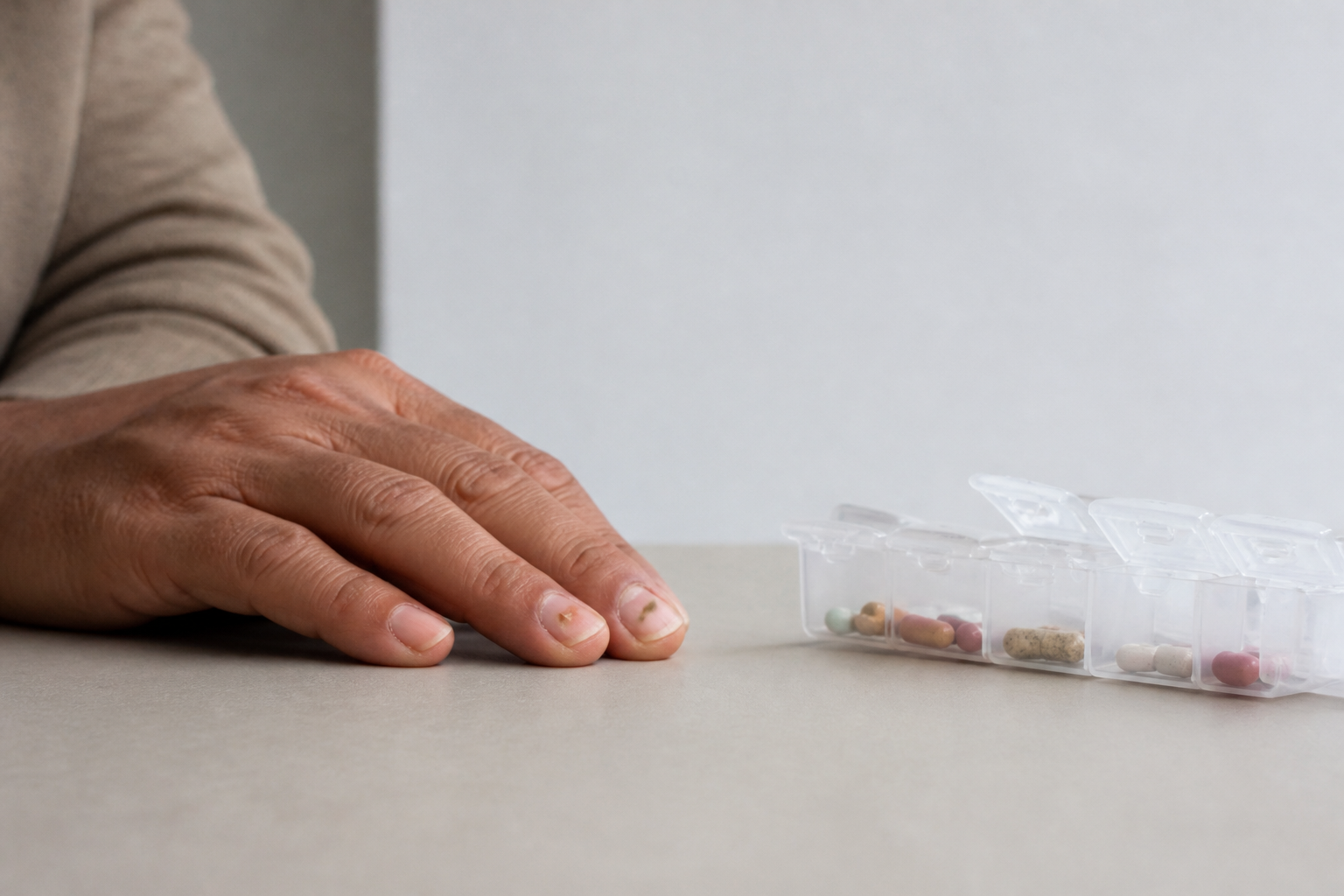
Nail detachment was reported by 39 percent of people taking GLP-1 medications in a new controlled study, against 9 percent of a comparison group with the same underlying conditions who had never used the drugs. That is more than a fourfold difference, and it held up even after researchers adjusted for pre-existing skin conditions and nutritional deficiencies, according to findings presented at the European Academy of Dermatology and Venereology Congress 2026.
GLP-1 receptor agonists are a class of drugs that act on a hormone signalling system to regulate blood sugar and appetite. The category includes semaglutide, sold as Ozempic and Wegovy, as well as tirzepatide, sold as Mounjaro and Zepbound, and older agents such as liraglutide and dulaglutide. They have become widely used for obesity and type 2 diabetes.
The researchers enrolled 575 people currently taking GLP-1 medications and set them against 1,329 individuals who had obesity and/or type 2 diabetes but had never used the drugs. Participants came from France, the United States, Brazil and Mexico. ScienceDaily reported the findings, which come from what the researchers described as the first controlled study to examine the relationship between these medications and nail health.
Taken together, two-thirds of GLP-1 users reported at least one nail disorder, against 53 percent of those in the comparison group. Nail discoloration showed the sharpest contrast: 46 percent of users versus 17 percent of non-users. After adjusting for skin conditions and nutritional deficiencies, nail detachment and discoloration were still roughly two to three times more common in the medication group, according to ScienceDaily.
A companion study of the same participants found that half of GLP-1 users reported unusual hair loss, against 34 percent of non-users. Hair loss that began after treatment started was reported by 26 percent of users and 12 percent of non-users. Scalp redness was approximately three times more frequent among people on the medications.
One obvious explanation for all of this would be rapid weight loss, which can disrupt nutrition and affect both nails and hair. The researchers put that directly to the test: even within the subset of participants who had lost weight, those on GLP-1 medications still reported nail problems at a significantly higher rate than people who had never used them. The scalp findings pointed in a similar direction. Study author Dr. Bruno Halioua, as quoted by ScienceDaily, said the pattern suggested "an inflammatory component" rather than the classical shedding seen after rapid weight reduction, and that "scalp inflammation was the rule rather than the exception."
Study author Dr. Charles Taïeb was quoted by ScienceDaily as saying the findings show "a clear association" but also that "not everything that happens during GLP-1 treatment is necessarily caused by the treatment itself." Around half of the medication users said they had experienced nail problems before they started the drugs.
That caveat matters. Both investigations were cross-sectional, meaning they captured a single point in time rather than following participants from the start of treatment. The symptom data came from self-report, not standardised clinical examinations. Cross-sectional studies can identify patterns and associations; they cannot establish that a drug caused a change. The research team said it plans prospective studies that will follow patients from the beginning of treatment and include clinical skin, hair and nail assessments alongside biological monitoring.
The research received institutional support from DUCRAY Laboratories, part of the Pierre Fabre Group, a company that makes dermatological and hair care products. ScienceDaily disclosed that relationship. Readers weighing the findings should know who funded the work.
Dr. Halioua was quoted by ScienceDaily as saying the changes are "frequent, usually benign, and are not a reason to stop an effective treatment on one's own initiative," and that anyone noticing hair shedding, scalp irritation or nail changes should raise it with their doctor rather than stopping therapy. Whether any of this is relevant to an individual depends on their medical history and is a question for the clinician managing their treatment.
Source: https://www.sciencedaily.com/releases/2026/10/261011211604.htm
Life & Health Today provides information for educational purposes only, not medical advice, diagnosis, or treatment. Always consult a qualified healthcare professional.