Longevity
Low muscle strength plus obesity linked to worse cognition in older adults
By John Hyland, . Life and Health Today.
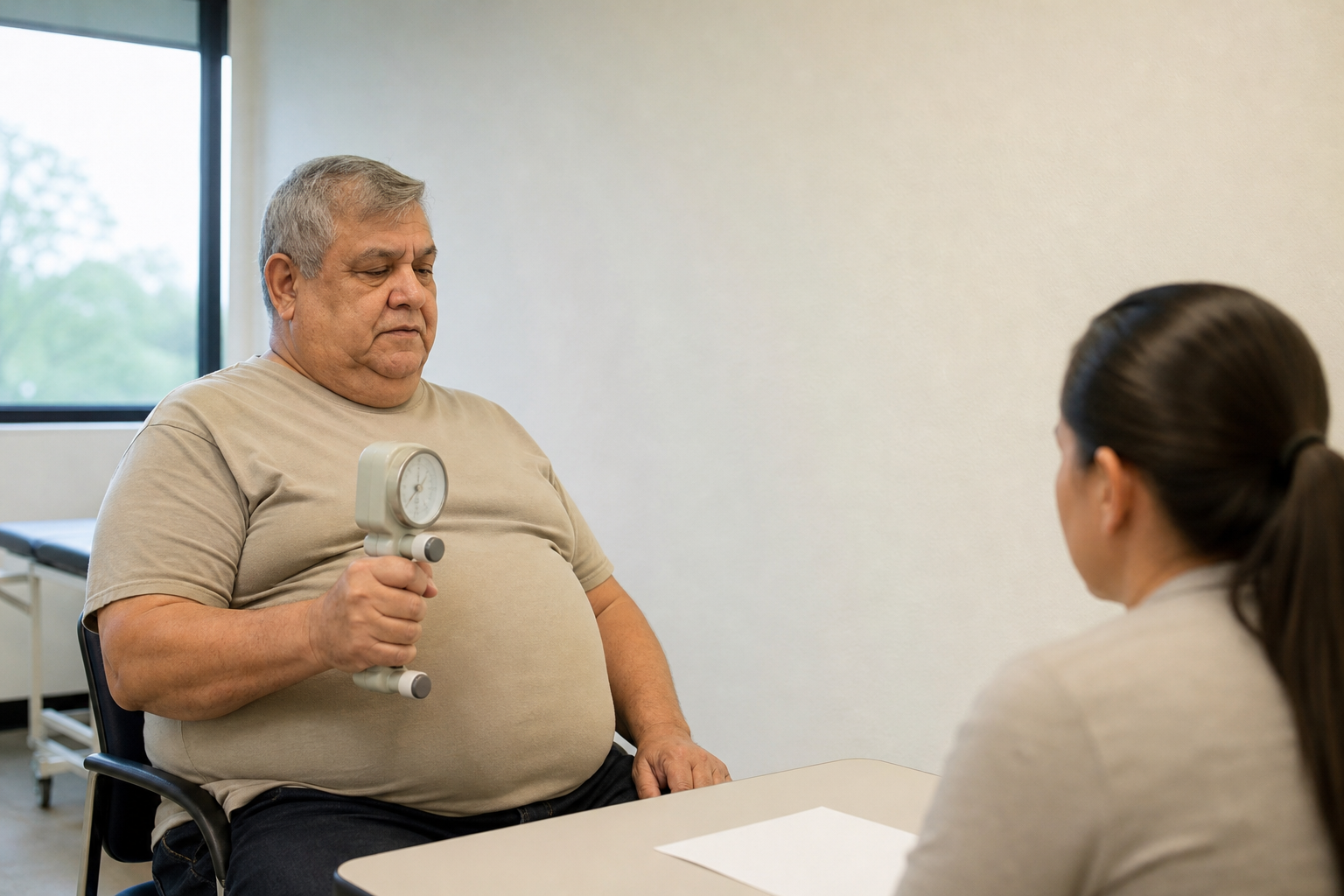
Older adults who combined obesity with low muscle mass and strength, or with low strength alone, performed worse on cognitive tests than their peers without those traits, according to a prospective cohort study published in the Journal of Cachexia, Sarcopenia and Muscle.
The study drew on data from the Taiwan Initiative for Geriatric Epidemiological Research, a research programme tracking older adults in Taiwan. At baseline, 366 participants aged 69 and older took part, with a mean age of 75.7 years and 54.6 percent women. Cognitive assessments were carried out at the start of the study and again at a two-year follow-up.
The researchers distinguished between two phenotypes. Sarcopenic obesity combines reduced muscle mass, reduced muscle strength and excess body fat, meaning the body has shed both the amount and the working capacity of muscle while accumulating fat. Dynapenic obesity, a related but narrower category, pairs low muscle strength with obesity without requiring that muscle mass itself be reduced. The study's primary obesity threshold was a body mass index at or above 27 kilograms per square metre, which sits below the 30 that many Western guidelines use. Muscle strength was measured by handgrip dynamometer; muscle mass by bioelectrical impedance analysis, a technique that estimates tissue composition using a mild electrical current.
Every one of the 16 participants classified as dynapenic obese also qualified as sarcopenic obese, so the two groups were identical in this sample.
Both phenotypes were associated with lower scores on the Montreal Cognitive Assessment, a standard screening tool for early cognitive problems, as well as on tests of immediate memory recall and attention. The associations held after statistical adjustment for other variables and remained evident specifically among women and among people who did not carry the apolipoprotein E epsilon-4 gene variant, a known genetic risk factor for Alzheimer's disease.
What this does not show is causation. Because the study is observational, it cannot establish that sarcopenic or dynapenic obesity caused the cognitive differences. People with these body-composition profiles may differ from others in ways the researchers could not fully account for. The sample was also relatively small at 366 participants, drawn from a single national cohort in Taiwan, which limits how far the findings can be generalised to other populations.
The study's authors noted that previous research in this area has been complicated by inconsistent definitions, with some studies labelling low-strength-plus-obesity as sarcopenic obesity when the more precise term is dynapenic obesity. The current work used consensus-based definitions to try to bring more rigour to the comparison.
The open question, which the authors stated directly, is whether interventions targeting these phenotypes, whether through exercise, nutrition or other means, can prevent or delay cognitive decline. That has not been tested. The associations reported here are a basis for designing such trials, not evidence that any intervention works.
For a reader weighing what this means personally, the finding is that two measurable physical traits, grip strength and body composition, may one day serve as early screening markers for cognitive risk in older adults. Whether acting on them changes outcomes is a question for future randomised trials. Anyone concerned about their own muscle strength, body composition or cognitive trajectory should raise it with a clinician who knows their individual history.
Life & Health Today provides information for educational purposes only, not medical advice, diagnosis, or treatment. Always consult a qualified healthcare professional.