Longevity
Lack of community toilets linked to higher depression risk in older Indians
By Arvin Shirali, . Life and Health Today.
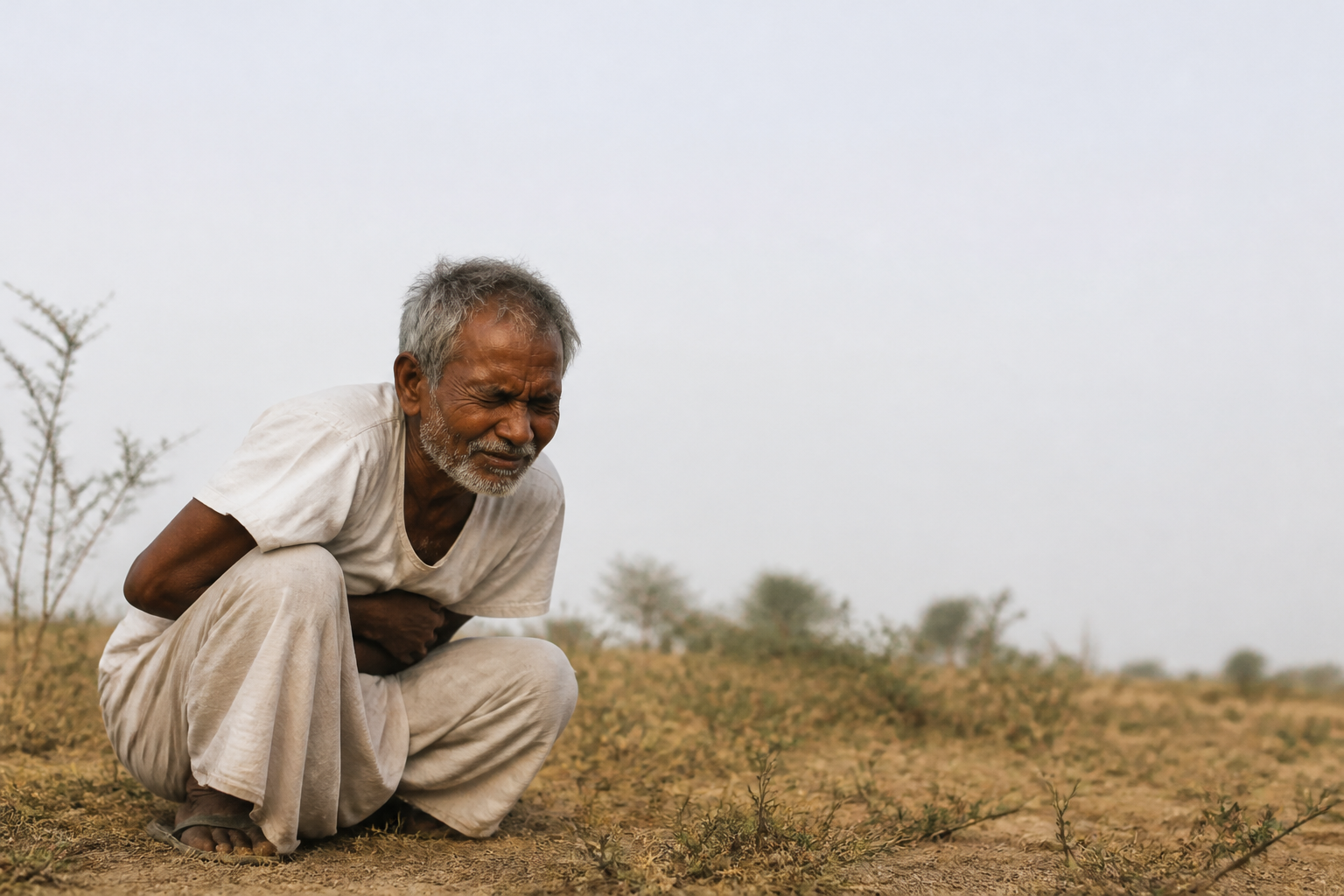
Older adults in India who live in communities where few households have toilets are more likely to show signs of depression than those in communities with higher toilet coverage, according to a study published in the journal GeroScience.
The researchers used data from the Longitudinal and Aging Study in India, a nationally representative survey that collected health, economic, social and psychological information from adults across all 36 Indian states and Union Territories except Sikkim. The analysis drew on data gathered between 2017 and 2018 from women and men over the age of 45.
Depression was measured using two internationally validated tools: the 10-item Center for Epidemiological Studies-Depression scale, which asks about symptoms such as low energy, trouble concentrating and feeling alone over the previous week, and the Composite International Diagnostic Interview Short Form, which is used to identify probable major depression. Major depression is a clinical diagnosis describing persistent low mood that significantly interferes with daily life.
The study found that people living in communities in the lowest fifth for toilet coverage had an odds ratio of 1.38 for depressive symptoms compared with those in communities in the highest fifth, with a 95% confidence interval of 1.08 to 1.76. In plain terms: the association was statistically meaningful, meaning it is unlikely to be a chance finding, though the confidence interval is relatively wide. The same pattern appeared when the researchers looked at probable major depression.
This is a cross-sectional study, meaning it measured toilet coverage and depression at the same point in time. That design can identify associations but cannot establish that low toilet coverage caused the depression. People in communities with poor sanitation may differ from those in better-served communities in many other ways that the analysis did not fully account for.
The researchers proposed several possible pathways. One is place-based stigma: the idea that living in a visibly degraded environment can erode a person's sense of self and increase psychological distress. Another is that fecal contamination in public spaces acts as a visible signal of disorder, which prior research has linked to depression and psychological distress. A third is that the environment itself, independent of how residents perceive it, may generate conditions that undermine mental health.
What the study does not establish is which of these pathways, if any, is driving the association, or whether addressing toilet coverage would reduce depression rates. The GeroScience report notes that improving community-level toilet coverage could prevent depression among older Indians, but that claim goes beyond what a cross-sectional study can demonstrate. A randomised trial, in which communities were assigned to receive sanitation improvements and then followed over time, would be needed to test whether the association is causal.
The study also relied on community-level toilet coverage as its measure, rather than whether individual participants had a toilet in their own home. The researchers argued this was deliberate: prior work had focused on household-level access, and they wanted to examine whether the broader community environment mattered independently. The multilevel modelling approach they used is designed to separate individual-level factors from community-level ones, though the published text available does not detail every covariate included.
The source text provided to this publication is the first portion of a longer article; the full limitations section was not available. Readers should treat this as a partial account of the study's own caveats.
The burden of depression among older adults in India is already substantial, according to the GeroScience paper. For a reader outside India, the finding is a reminder that mental health in ageing populations is shaped by the physical environment people live in, not only by individual biology or personal history. Whether that principle extends to other low- and middle-income countries with similar sanitation gaps is an open question this study does not answer. Whether it applies to a reader's own situation is something to discuss with a clinician who knows their circumstances.
Source: https://link.springer.com/article/10.1007/s11357-026-02537-9
Life & Health Today provides information for educational purposes only, not medical advice, diagnosis, or treatment. Always consult a qualified healthcare professional.