Longevity
Palladium membranes destroy PFAS in water, not just filter them out
By Brett Perry, . Life and Health Today.
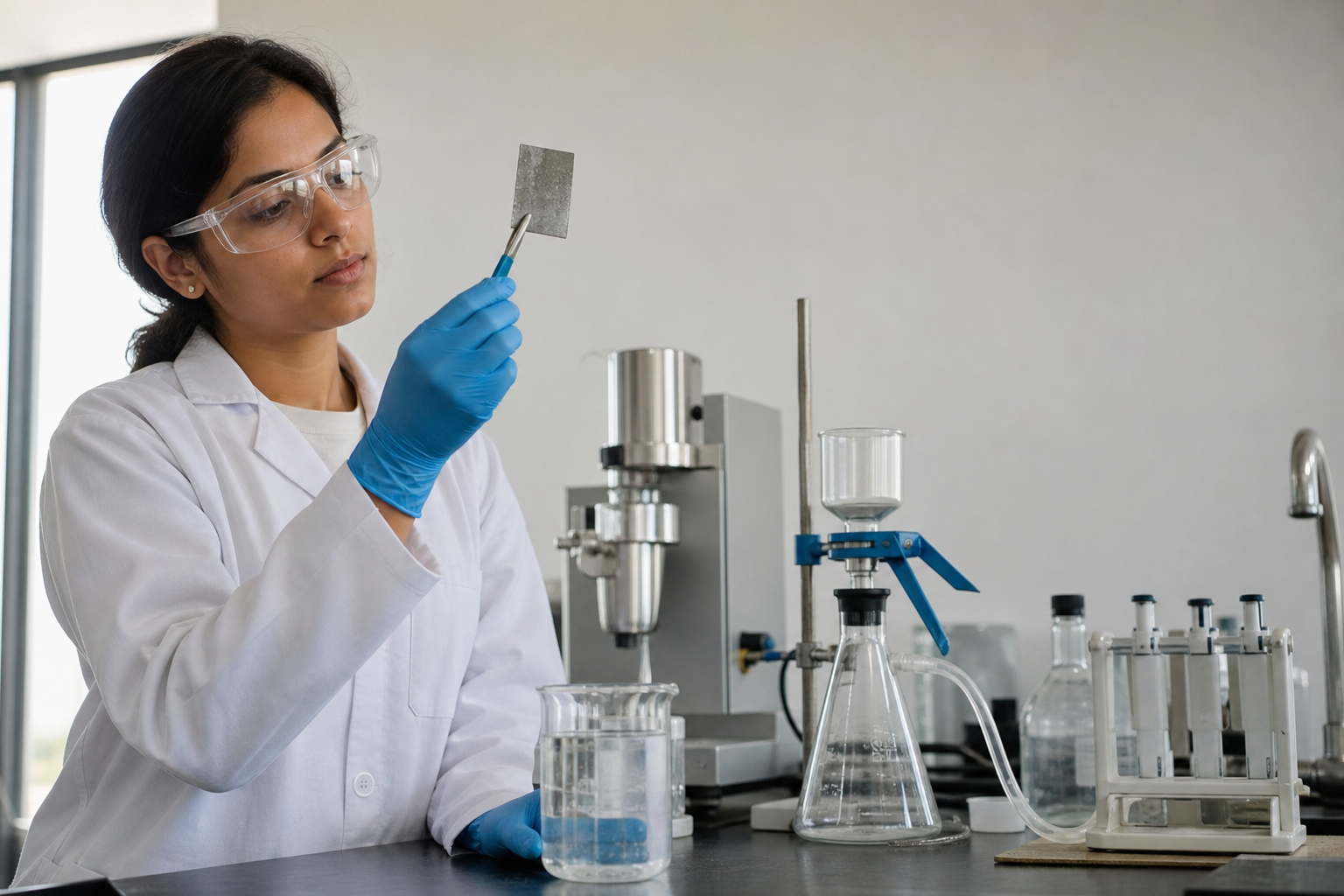
Most water-treatment systems that handle PFAS, the per- and polyfluoroalkyl substances known as 'forever chemicals' because they resist natural breakdown, do the same thing: pull the contaminants out of the water and leave them concentrated in a waste stream that still has to go somewhere. A new approach reported in Proceedings of the National Academy of Sciences tries to solve the second problem at the same time as the first.
Researchers at Arizona State University, Rice University, Tongji University, the National University of Singapore, and Nanjing University built membranes coated with palladium, a metal catalyst, and ran hydrogen gas through the fiber walls. The palladium converts the hydrogen into two active forms. One sits on the surface and helps attract PFAS molecules; the other is stored inside the palladium crystal structure as what chemists call beta-phase palladium hydride, and it supplies the energy needed to break carbon-fluorine bonds, the chemical feature that makes PFAS so persistent.
"The palladium attracts the PFAS molecule, and the palladium attracts the hydrogen and puts them together," said Bruce Rittmann, PhD, director of Arizona State University's Biodesign Swette Center for Environmental Biotechnology and the study's lead researcher, as quoted by Genetic Engineering and Biotechnology News.
What the system was tested on
The team ran the membranes continuously for 58 days against six PFAS compounds that are currently subject to regulatory limits: PFOA, PFOS, PFNA, PFHxS, PFBS, and GenX. Removal reached as high as 96%, and defluorination, meaning the actual breaking of carbon-fluorine bonds rather than just physical capture, reached 83%, according to the paper published in Proceedings of the National Academy of Sciences.
Not every compound responded equally. Longer-chain PFAS were removed and defluorinated faster than shorter-chain ones. GenX, a compound used as a replacement for some older PFAS, was the most resistant: the researchers attributed that to its ether linkage, weaker attachment to the membrane surface, and higher average energy required to break its carbon-fluorine bonds. The membrane still removed and defluorinated GenX, producing a breakdown product the paper identifies as 2-propoxypropanoic acid.
What this does not yet mean for drinking water
This is laboratory-scale work. The researchers are explicit that practical deployment will require further engineering, and the most immediate obstacle is cost: palladium is an expensive metal, and reducing how much the system needs is a stated priority. Rittmann told Genetic Engineering and Biotechnology News: "Palladium is expensive."
One path the team is considering is using the membranes not as a replacement for existing filtration systems but as a treatment stage for the concentrated waste those systems already produce, which would limit how much palladium-coated surface area is needed. A separate line of research at the same group is combining palladium with pollutant-degrading bacteria in hybrid membranes, though that work is distinct from the catalytic system described in this paper.
The significance of the approach, if the engineering challenges are resolved, is that it closes a loop conventional treatment leaves open. Activated carbon, ion exchange, and standard membrane filtration can all remove PFAS from water, but the captured chemicals remain intact and require further handling. A system that breaks the carbon-fluorine bond during removal would eliminate that secondary waste problem rather than defer it. Whether that holds at the scale and cost a municipal water system would require is what the next stage of development would need to show.
Life & Health Today provides information for educational purposes only, not medical advice, diagnosis, or treatment. Always consult a qualified healthcare professional.