Longevity
Strength declines faster than most people expect. Resistance training is the clearest answer.
By Life and Health Today Staff, . Life and Health Today.
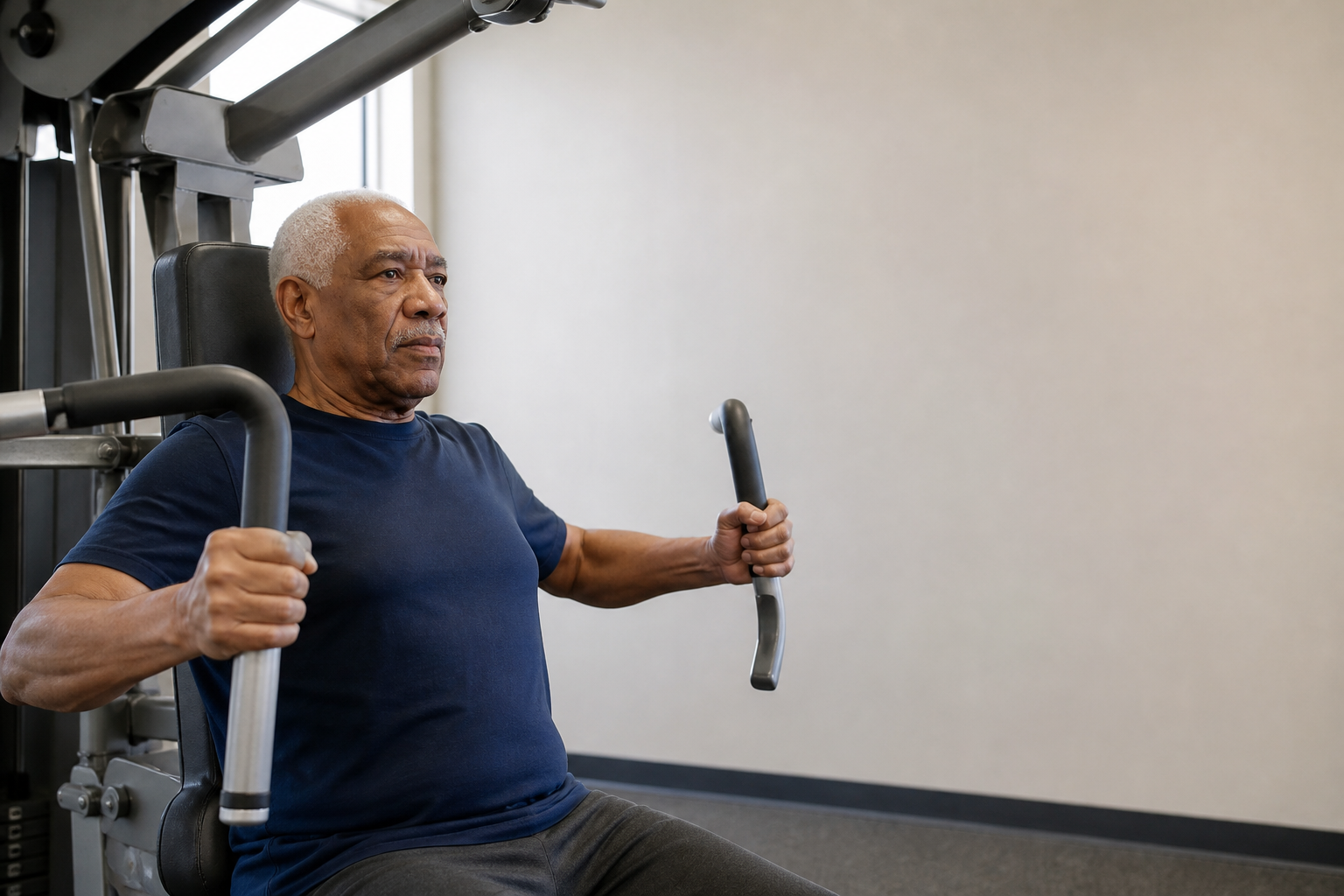
What the numbers actually look like
About 22 percent of people in their 60s cannot lift or carry a ten-pound weight, or can only do so with difficulty, according to data cited by physician and longevity researcher Peter Attia on his website, PeterAttiamd.com. By the 80s, that figure rises to 46 percent. The same source reports that 45 percent of people 80 and over struggle to stand up from an armless chair without help.
Those numbers come from population-level data, and Attia flags a wrinkle in how they are usually presented. Most figures on age-related muscle loss are drawn from cross-sectional studies, meaning researchers compare different people at different ages rather than following the same individuals over time. When longitudinal studies, which track the same people across years, are used instead, the rates of decline each decade tend to be faster, according to multiple studies Attia cites.
There is a second complication. The average trajectory looks like a gradual slope, but Attia describes what he calls "catabolic crises," sharp drops in muscle mass and strength, most often triggered by injury or illness and the inactivity that follows, from which many people never fully recover.
Why resistance training is the central recommendation
Resistance training, meaning exercise that works muscles against an external load, is described by Attia as "a mandatory component of the longevity toolkit." The evidence he cites covers several areas beyond muscle mass itself.
In randomized controlled trials, resistance training has been shown to slow bone mass loss and, in some cases, build it. It also improves glucose metabolism, the body's ability to manage blood sugar, through mechanisms that may be independent of any gains in muscle mass, according to studies Attia references. Separate randomized controlled trial evidence he cites links resistance training to improvements in depression and sleep quality.
On mortality, the picture is observational rather than experimental: low muscular strength and power are associated with higher risk of death from all causes, across multiple studies Attia cites. An association of this kind means people with lower strength were more likely to die sooner; it does not establish that building strength directly extends life, because other factors could explain the relationship. Attia notes the association is consistent across the literature, but the causal question remains open.
What the guide covers
The full article on PeterAttiamd.com is a premium, subscriber-only piece. The publicly available portion outlines the structure: the program itself comes first, followed by the science behind it, including where Attia says the evidence is strong and where he describes the recommendations as judgment calls. It also covers adjustments for pain and age, nutrition, and recovery.
Attia draws on conversations with exercise scientists Layne Norton, Andy Galpin, and Mike Israetel, among others, though the specific content of those discussions is behind the paywall.
What the evidence supports
Muscle and strength decline with age, the decline is faster than cross-sectional data suggests, and resistance training is the intervention with the most consistent evidence across multiple outcomes. The observational data on mortality is suggestive but not proof of cause and effect.
The evidence Attia presents is strongest for direct physical outcomes, maintaining the ability to carry weight, stand up, and move through daily life, and for bone density and metabolic health in randomized trial settings. Whether that translates to a longer life is harder to establish from the available data.
What kind of program fits an individual's health history, existing injuries, and goals is a question for a clinician or qualified exercise professional who knows their situation.
Source: https://peterattiamd.com/a-longevity-playbook-for-building-strength-and-muscle-mass/
Life & Health Today provides information for educational purposes only, not medical advice, diagnosis, or treatment. Always consult a qualified healthcare professional.